Vast fields full of flowers, meandering streams and villages built on hills. Groningen's landscape is a work of art in itself. Not for nothing did it serve as inspiration for many an artist. Real works of art can also be found in this landscape. Art made by human hands. Of steel, stone and wood. Art with a story. Come along, past works of art in the Groningen landscape.
De Grote Kijker
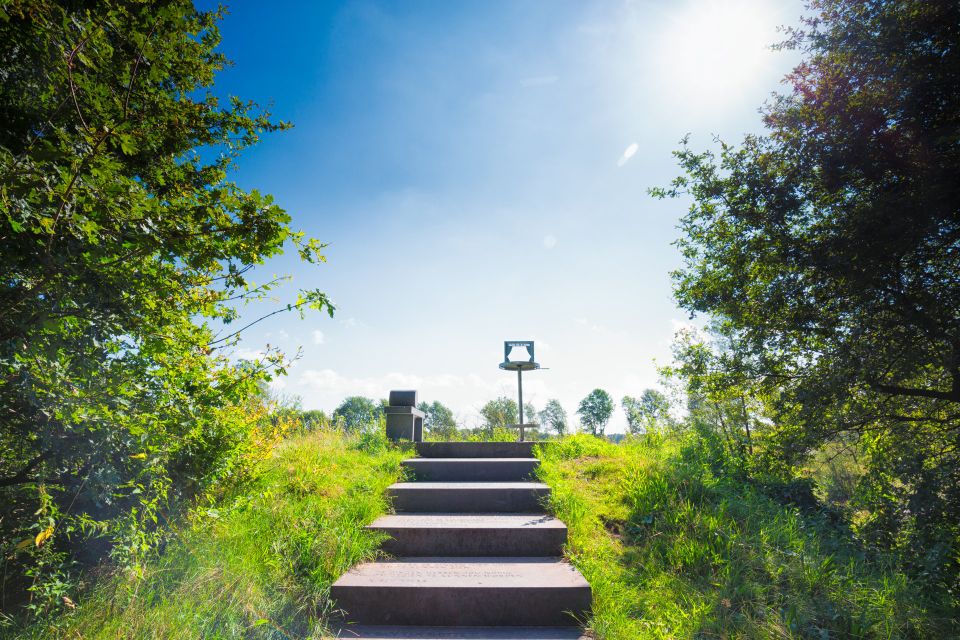
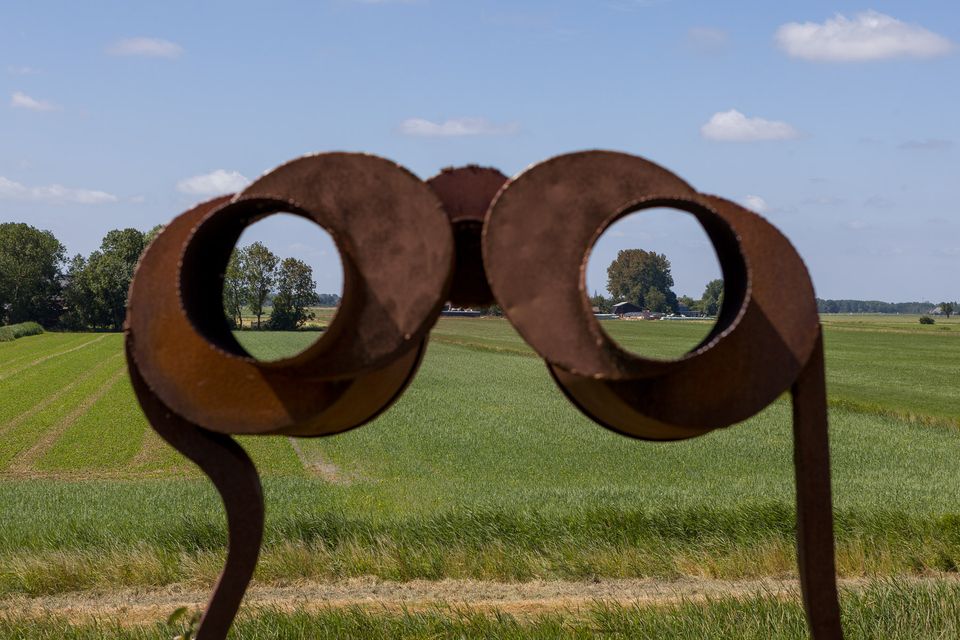
Ten Boer - Between the Damsterdiep and the Ten Boersterbos lies a four-hectare landscape park. In the park you will find a six-metre-high hill, the Spottershill. On top you will find a pair of corten steel binoculars made by Herbert Koekkoek. The viewer's lens is focused on the city of Groningen, in reference to the partnership the former municipality of Ten Boer had with the city. Fancy actively discovering art? De Grote Kijker' is part of a cycle route that Kunstpunt has set out along art in Ten Boer.
City landmarks
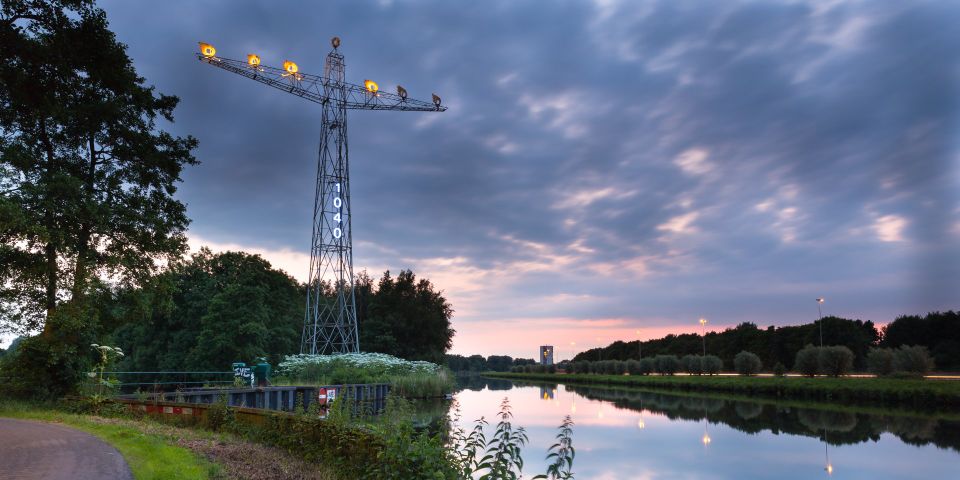
Groningen – north , oost, south or west. Whichever direction you’re coming from, when you drive into the city, there’s a good chance you’ll come across one of the city markers. They were installed in 1990 to mark the 950th anniversary of Groningen. Just as the city gates once marked the city’s boundaries. Each artwork was designed by a different artist, resulting in a colourful collection of works. From a joker on a tower of cards to an electricity pylon displaying the days of the week.
De Baak
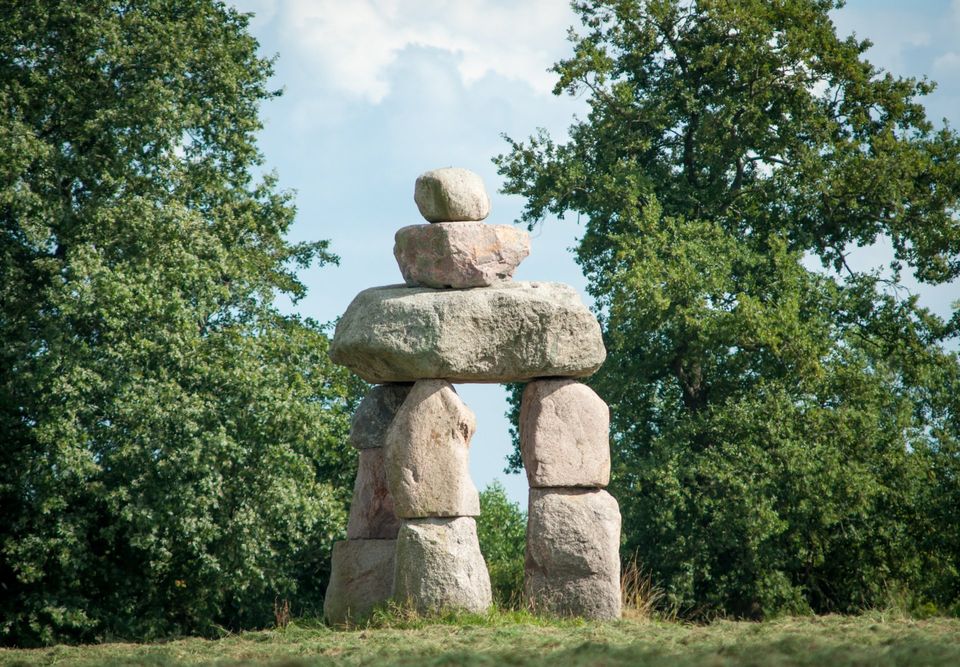
Lutjegast – In a meadow near Lutjegast stands a pile of stones, but not just any pile of stones. You might not realise it straight away, but you are standing here on the northernmost tip of a spur of the Drents Plateau. A landscape shaped by various ice ages. During that time, many erratic boulders drifted this way from Scandinavia. The work is a reference to the area’s history. And the name says it all: the 6.5-metre-high artwork is a beacon in the landscape.
Hemelpoort
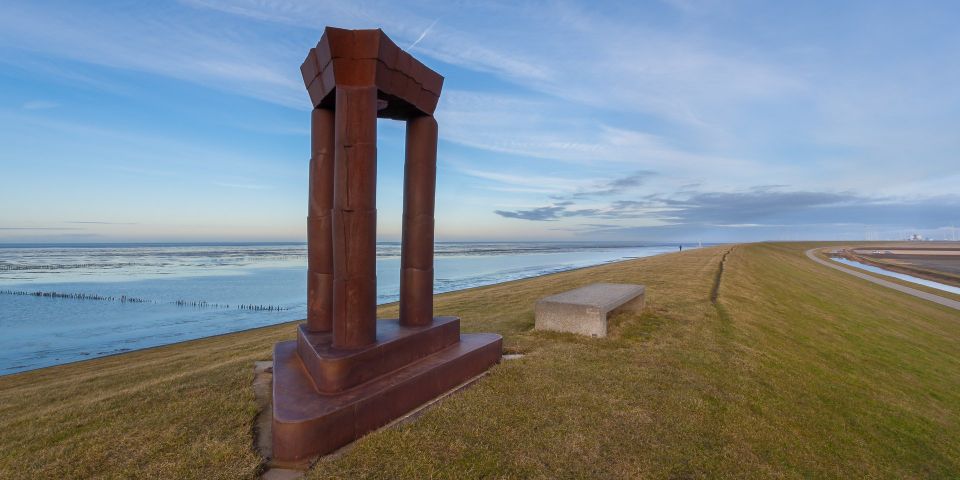
Noordkaap – Here , at the northernmost tip of the Dutch mainland, stands ‘De Hemelpoort’(The Gate to Hemelpoort). An impressive 2.5-metre-high gate. Exposure to the weather (of which there is plenty here) has given the gate its rust-brown colour. The Groningen artist René de Boer actually called his gate ‘Poort Kaap Noord’, but ‘De Hemelpoort’soon became the popular name. When you stand here on top of the dyke and look out over the sandbanks, you can’t help but agree.
Rest stops
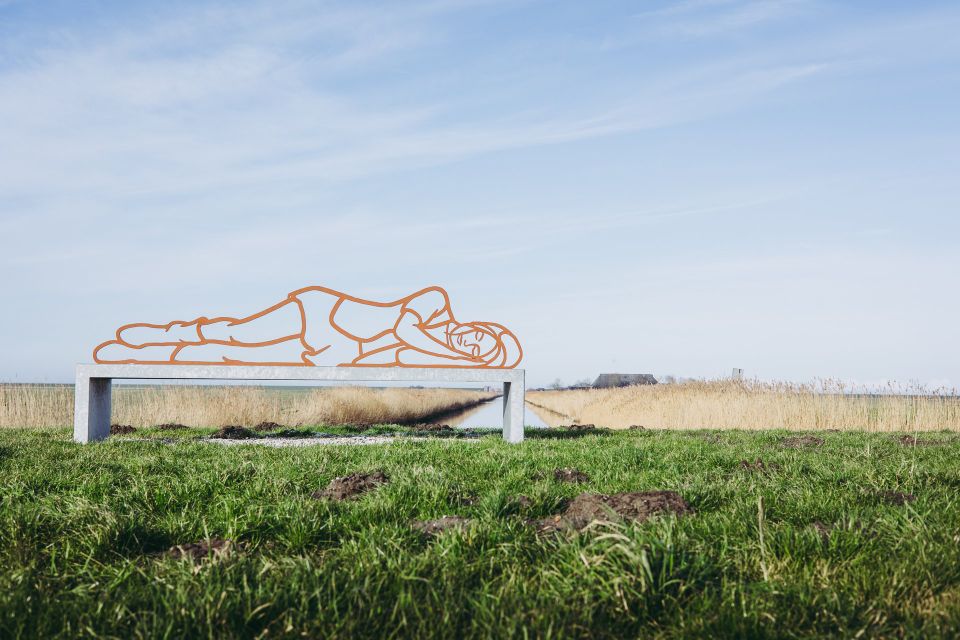
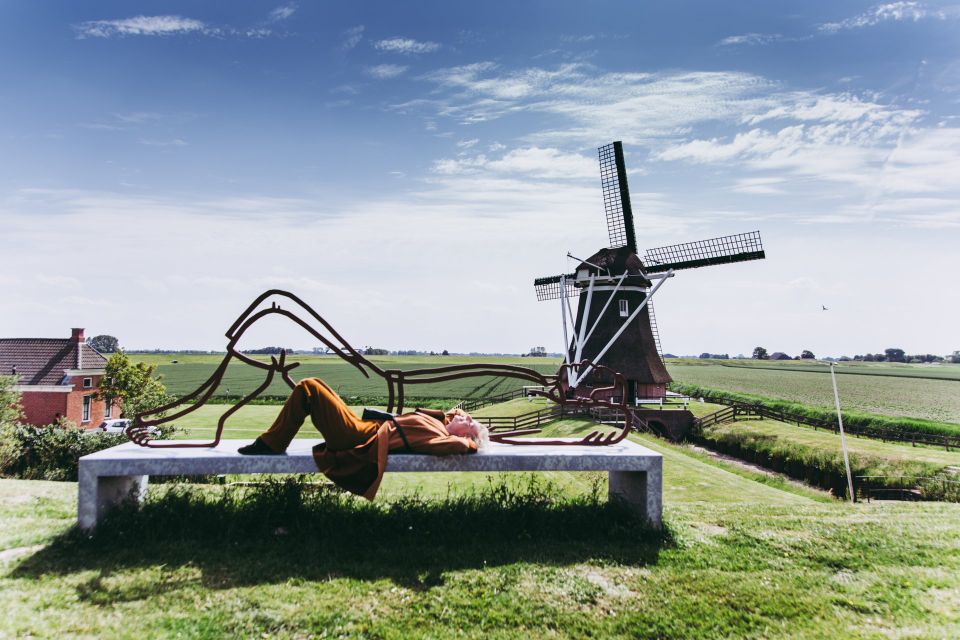
Various locations – Fancy a breather whilst cycling? You can do just that at a rest stop. In the north of the province, they take this quite literally. At five iconic locations, you’ll find enormous sculptures of people resting. And the best part is: you too can relax here – the benches are there for that very purpose. The sculptures have been placed at striking locations in the landscape, such as the ‘Goliath’ windmill and Noordpolderzijl.
Ede Staal monument
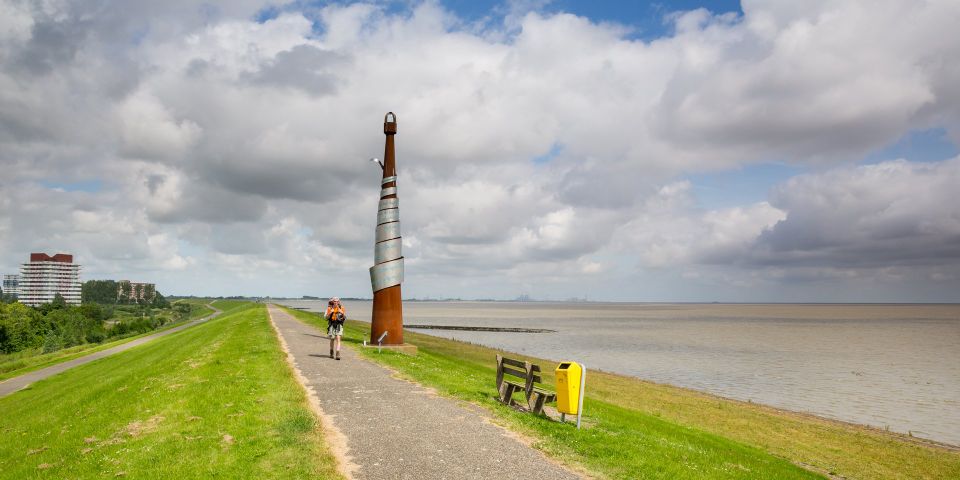
Delfzijl – Since 2001, a large statue has stood on the dyke at Delfzijl. This ten-metre-high column is a tribute to the Groningen singer Ede Staal. The most famous performer of Groningen folk songs passed away 15 years earlier in the same city. The silver band wrapped around the column bears the lyrics to one of his best-known songs, ‘Credo – Mien bestoan’.
Gateways
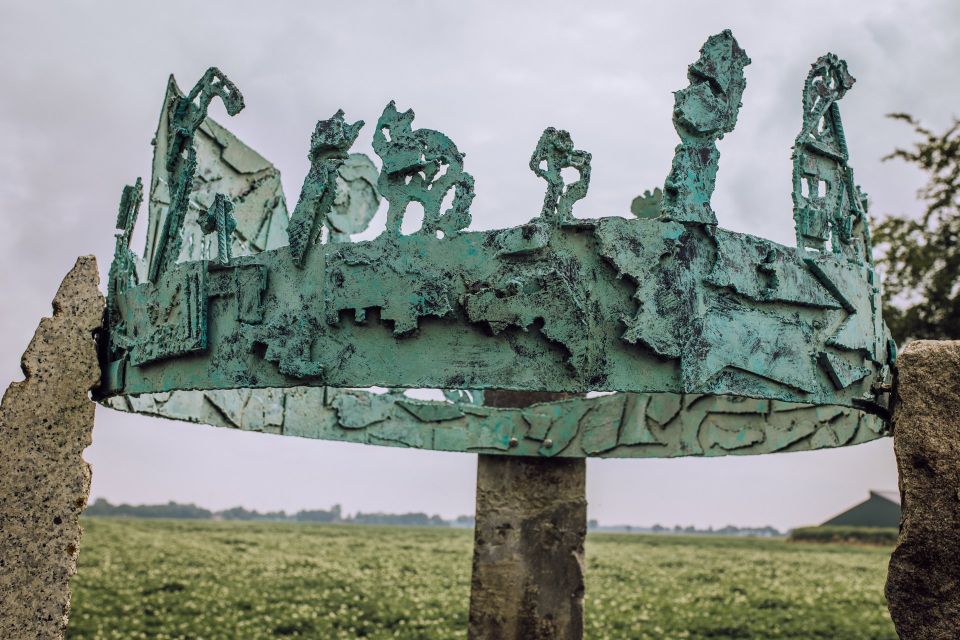
Borgercompagnie – The village of Borgercompagnie lies between Veendam and Sappemeer. It is a village that stretches so far that it lies within two municipalities. In 2002, when the artwork ‘Toegangspoorten’ was built, there were even three municipalities here. The artwork was built at the point where the three municipalities meet. The pillars form the gates to each of the three municipalities. Each of the columns is also a different colour, to highlight the differences between the regions. The ring connecting the pillars features drawings by children from the municipalities.
Waaiboei
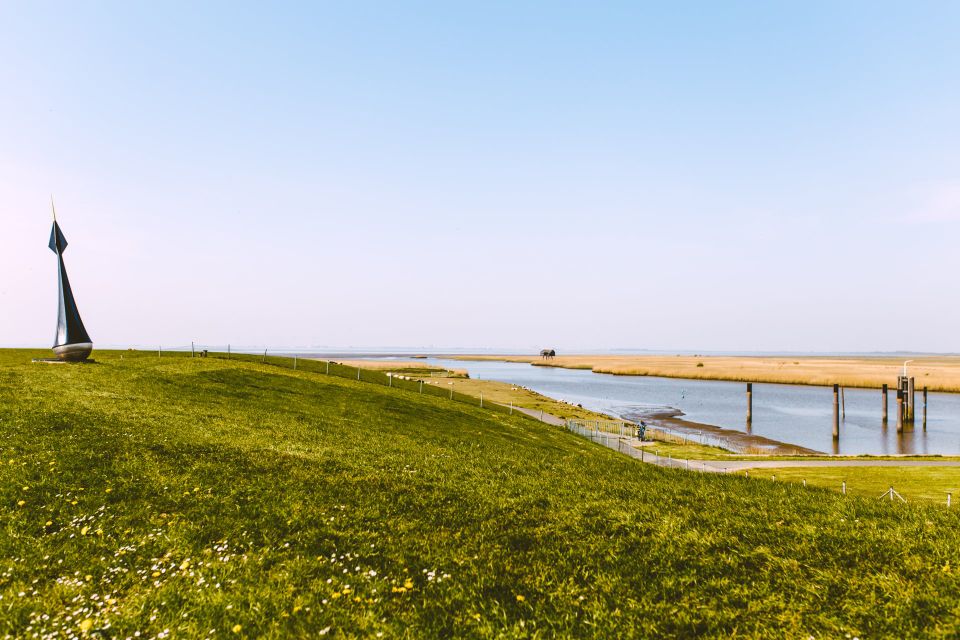
Nieuwe Statenzijl – A work of art that looks different every time you look at it: that’s the wind buoy. This artwork on the dyke at Nieuwe Statenzijl, where the Kiekkaaste is also located, is guided by the wind. Martin Borchert’s eight-metre-high sculpture stands freestanding on the dyke. Because the spherical base is weighted down with concrete, the artwork swings with the wind but remains in place.
Theater van de natuur
Sellingen – In Sellingen, along the Ruiten Aa, stands a striking nature viewing hill. At the top of the hill stands a movable sculpture. Peek through the curtains of this little theatre and take in the view of Groningen’s greatest work of art: nature. From the hill, you’ll enjoy a magical view of the Westerwold landscape. Nature, incidentally, isn’t the only thing you can admire here. The steps leading up the hill are inscribed with poems written by well-known Dutch figures. A lovely combination of culture and nature.