
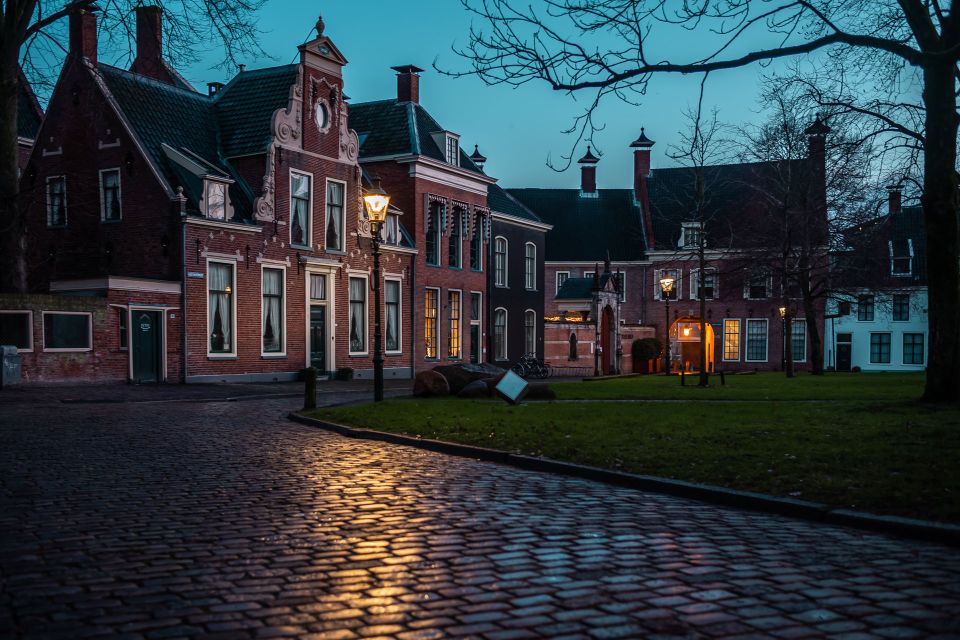
Martinikerkhof
The Martinikerkhof is a ‘crown jewel’. Crown jewels are green spaces in the city where nature and history combine to create something special. They are cared for and protected as if they were precious jewellery.
The Martinikerkhof is one of the oldest parts of the city of Groningen. Over the centuries, various buildings serving ecclesiastical and administrative purposes were erected here. It remained in use as a cemetery until 1828. After that, it was no longer legally permitted to bury the dead within the city walls. The oldest known graves in the (former) cemetery date from the fifth century AD. Until 1627, St Walburga’s Church stood in the cemetery, just behind the Martini Church, and this probably served as a bishop’s chapel. Since 1990, the site of St Walburga’s Church’s well has been home to the city landmark ‘Het Tiende Teken’ by Daniel Libeskind, erected to mark the 950th anniversary of the city of Groningen. The Martinikerkhof was even used as a car park for a time, but now serves once again as a green, peaceful spot in the heart of the city centre.
Trees …
The Martinikerkhof is one of the oldest parts of the city of Groningen. Over the centuries, various buildings serving ecclesiastical and administrative purposes were erected here. It remained in use as a cemetery until 1828. After that, it was no longer legally permitted to bury the dead within the city walls. The oldest known graves in the (former) cemetery date from the fifth century AD. Until 1627, St Walburga’s Church stood in the cemetery, just behind the Martini Church, and this probably served as a bishop’s chapel. Since 1990, the site of St Walburga’s Church’s well has been home to the city landmark ‘Het Tiende Teken’ by Daniel Libeskind, erected to mark the 950th anniversary of the city of Groningen. The Martinikerkhof was even used as a car park for a time, but now serves once again as a green, peaceful spot in the heart of the city centre.
Trees are important for nature in the city. Native tree species in particular, such as monumental oaks, lime trees and chestnut trees, support entire biotopes. Furthermore, trees contribute to the quality of the living environment. They moderate the temperature by providing shade and shelter and by releasing water vapour into the air. Furthermore, they convert carbon dioxide into oxygen and trap dust. The older the tree, the greater its value to its surroundings.