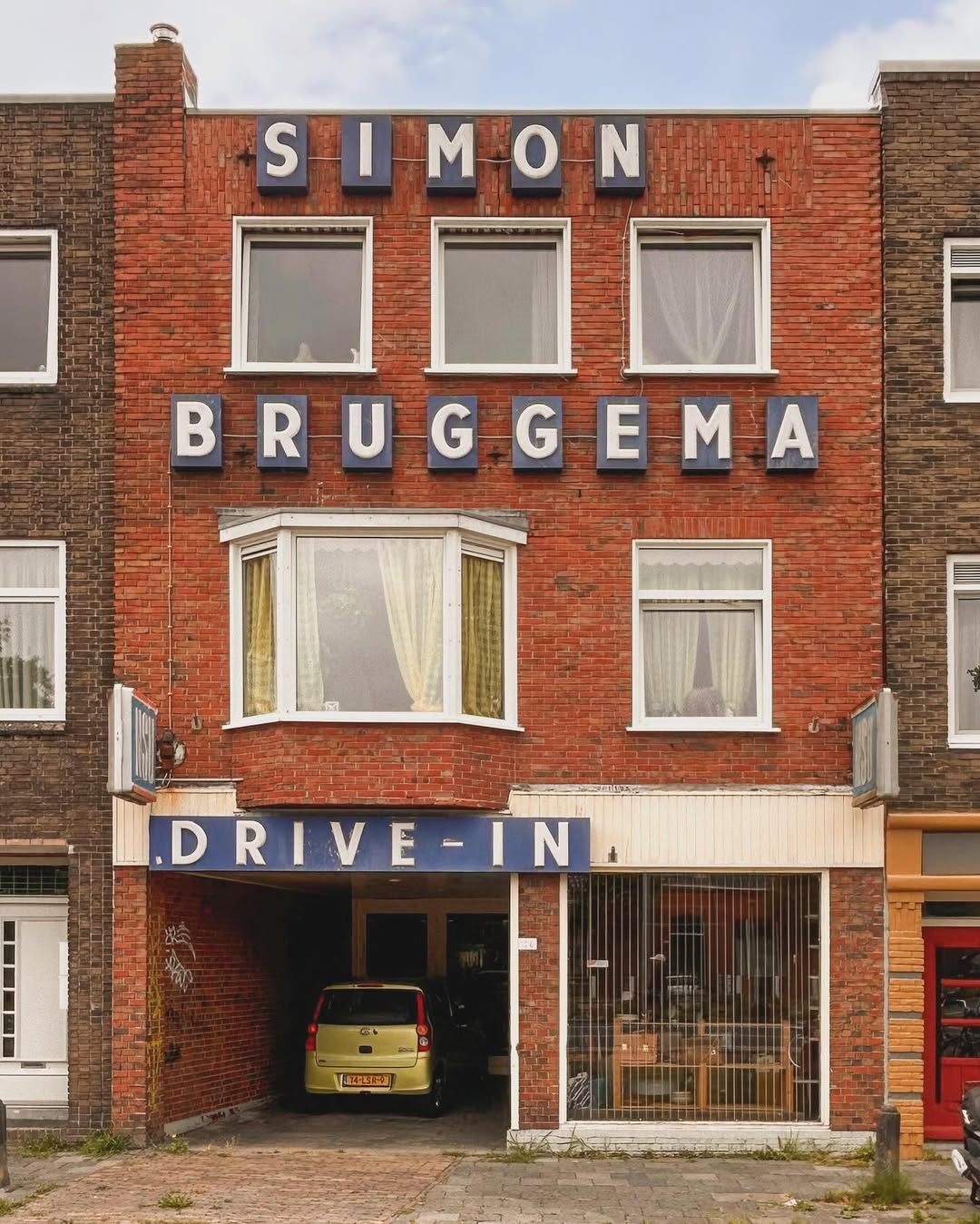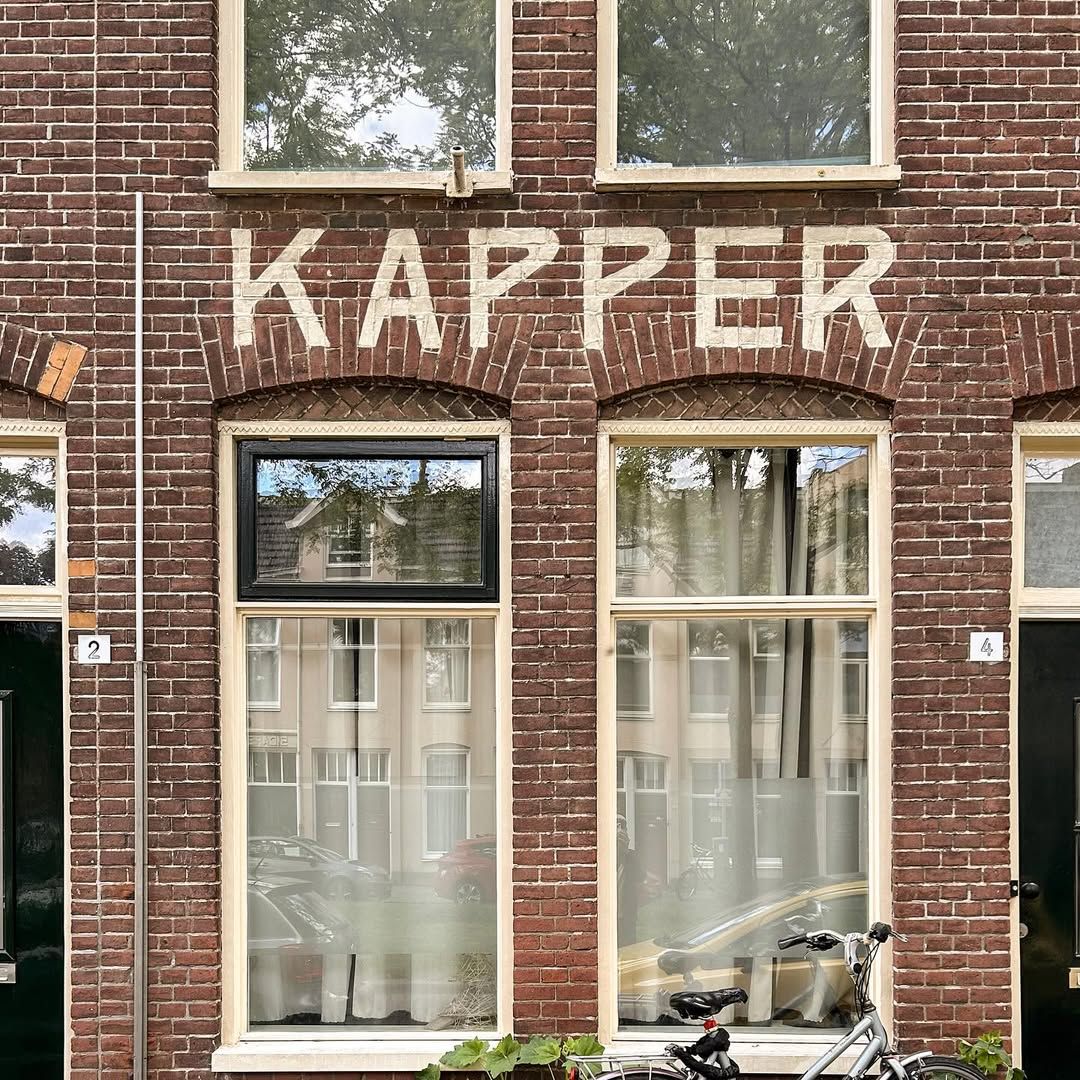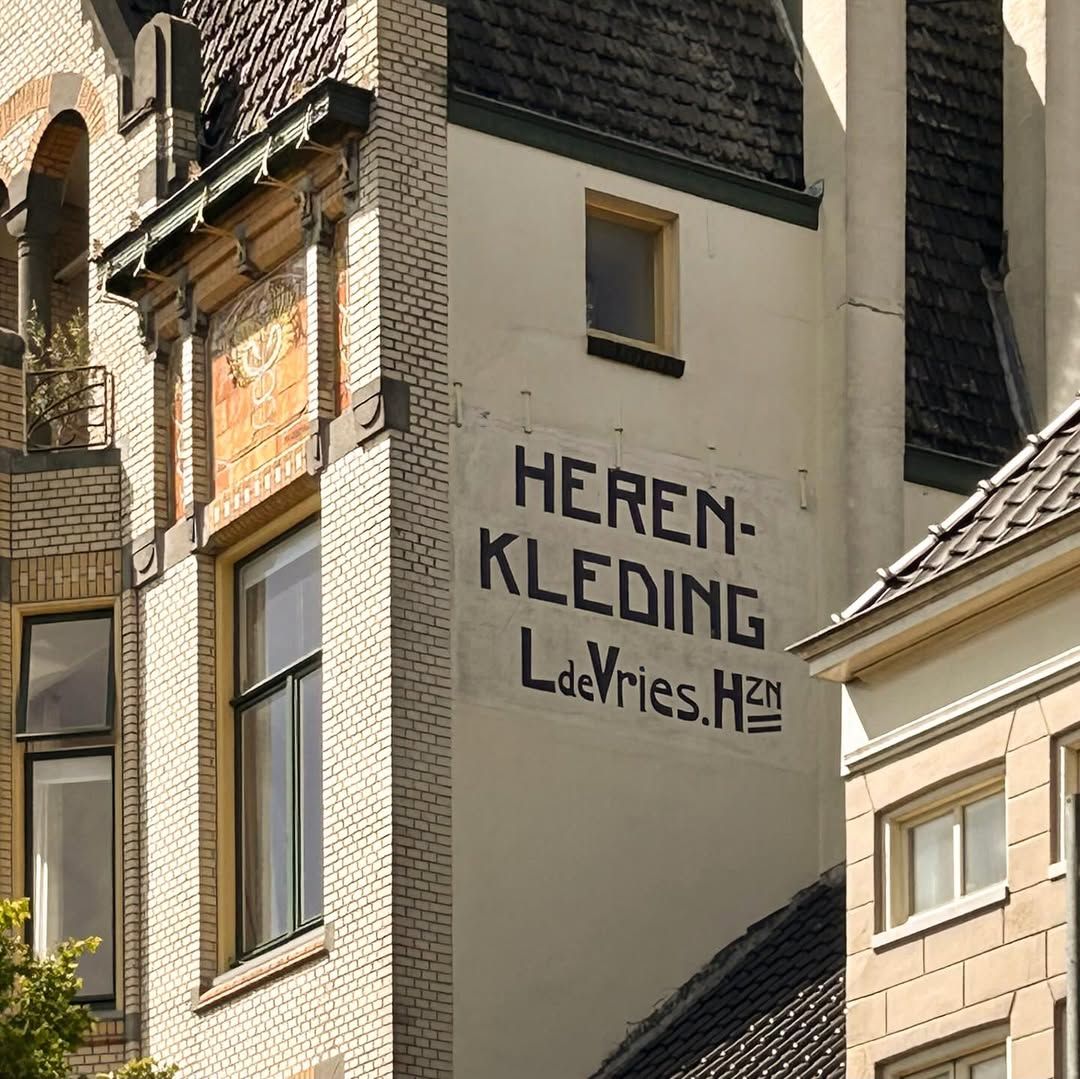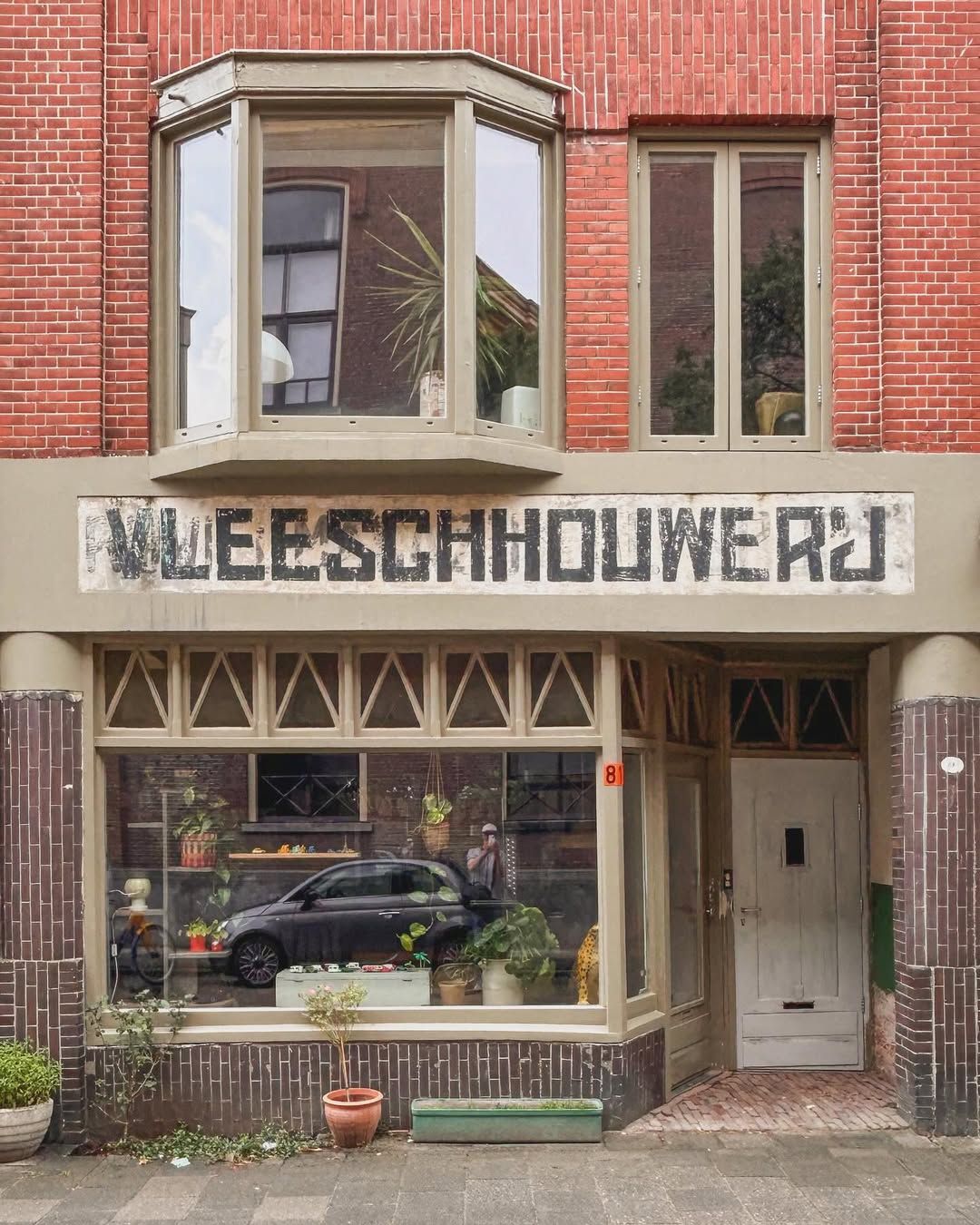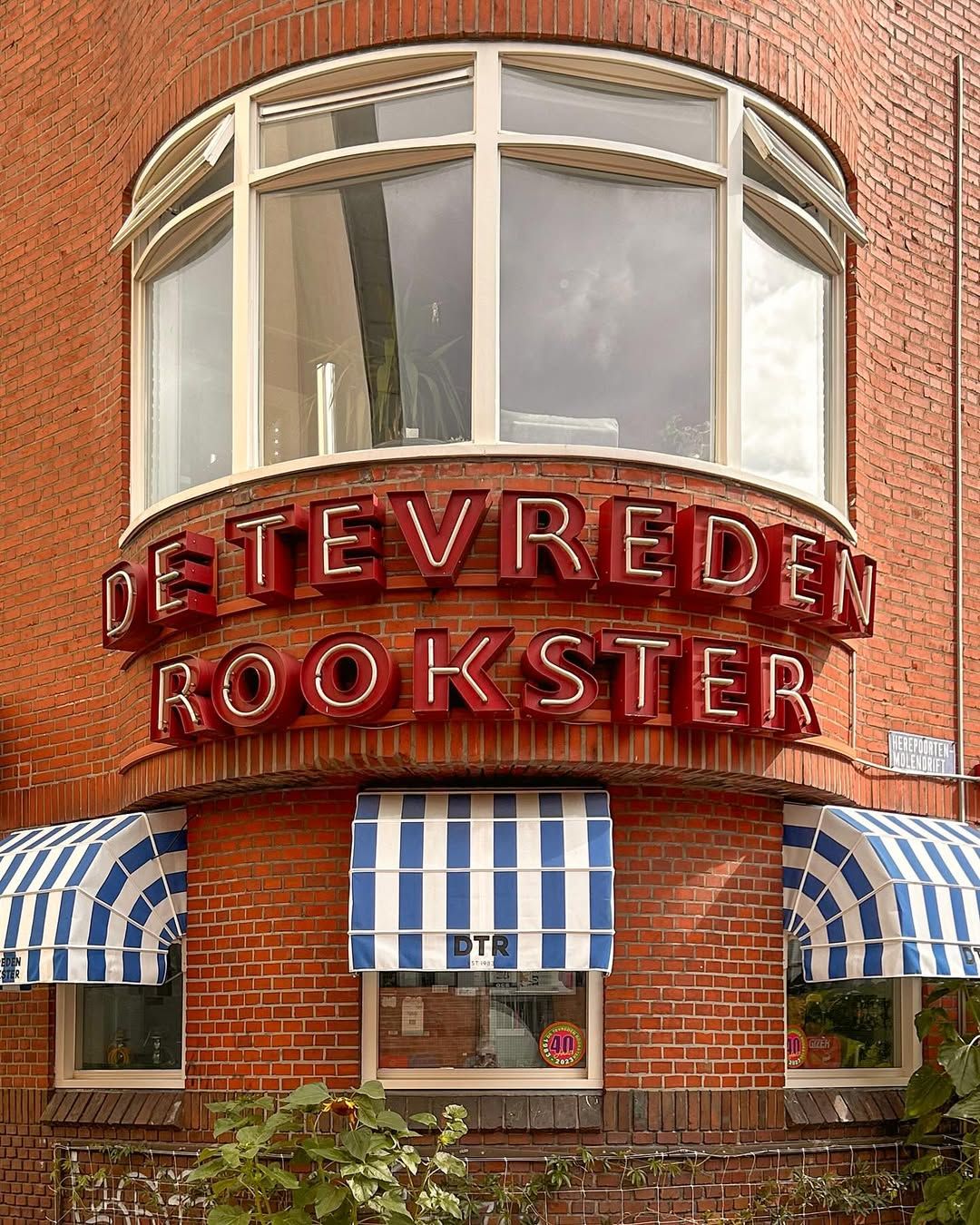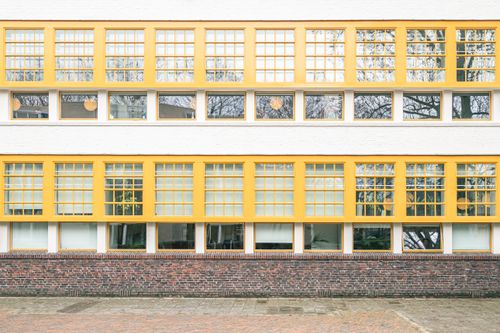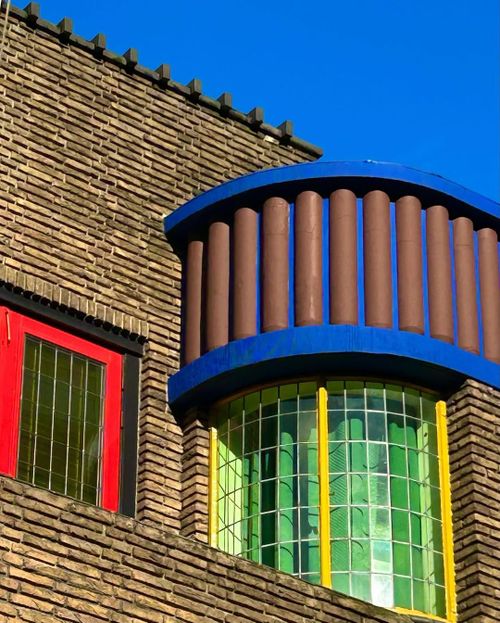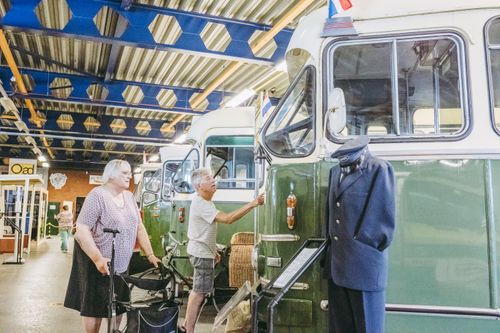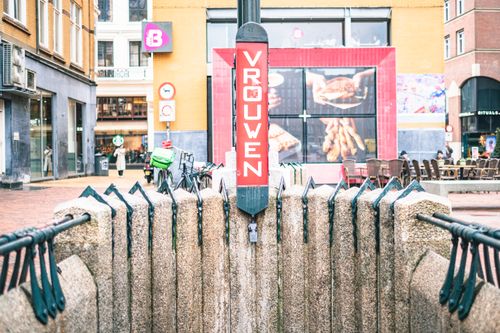
The history of the city can be read in the details of its buildings. Typefaces, numbers and symbols tell stories about a building’s function and the era in which it was built. As applied art, they sometimes disappear unnoticed from the streetscape — which is a shame, because it is precisely these façade inscriptions and wall advertisements that preserve a piece of the city’s history. From a raincoat factory to an old butcher’s shop: they can be found all over the city. Fancy joining us on a typography safari?
Simplon
Boterdiep – For over forty years, music has been playing behind the façade on Boterdiep. Simplon has become a fixture on Groningen’s cultural scene, where electronic beats, jazz and punk have all found a home. But look up: high up in the gable, you can still see ‘Weatherproofs’. You need sharp eyes to spot it. The name refers to the raincoat factory of the same name that once stood here. When the building stood empty in the 1970s, it was squatted in by hippies and artists, who turned it into an unconventional pop venue.
View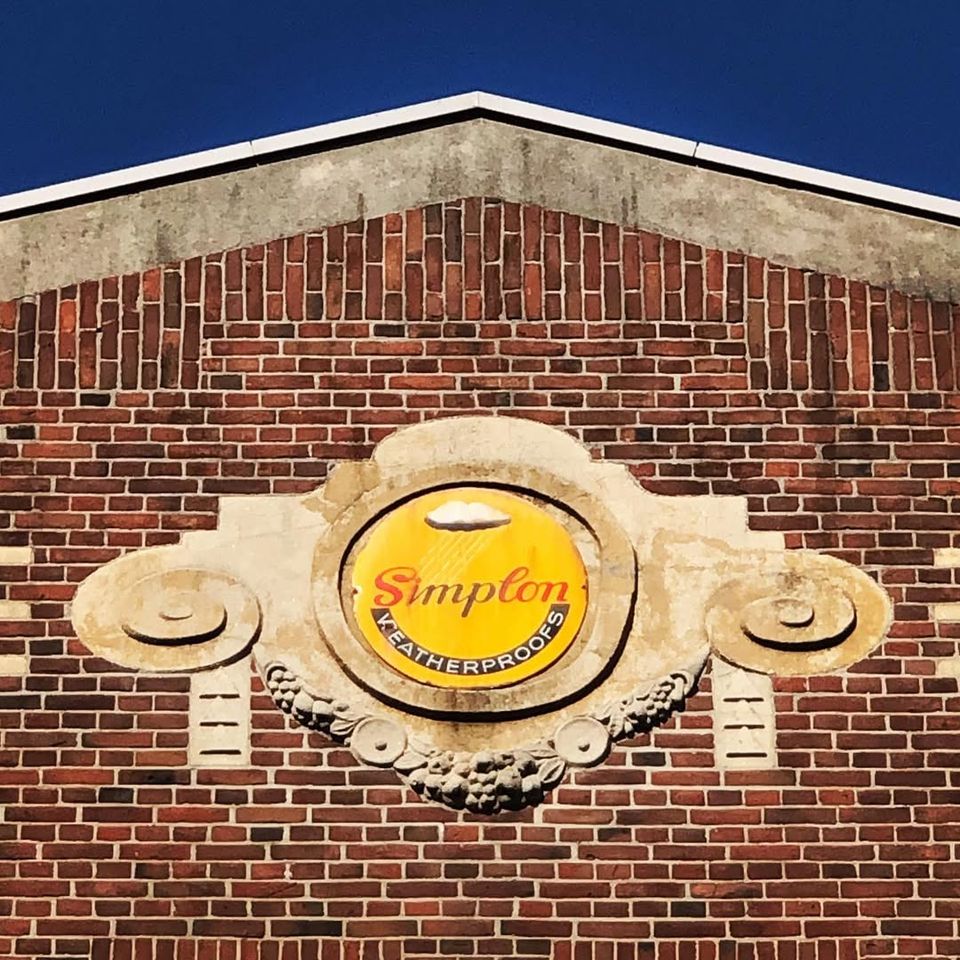
Technical College
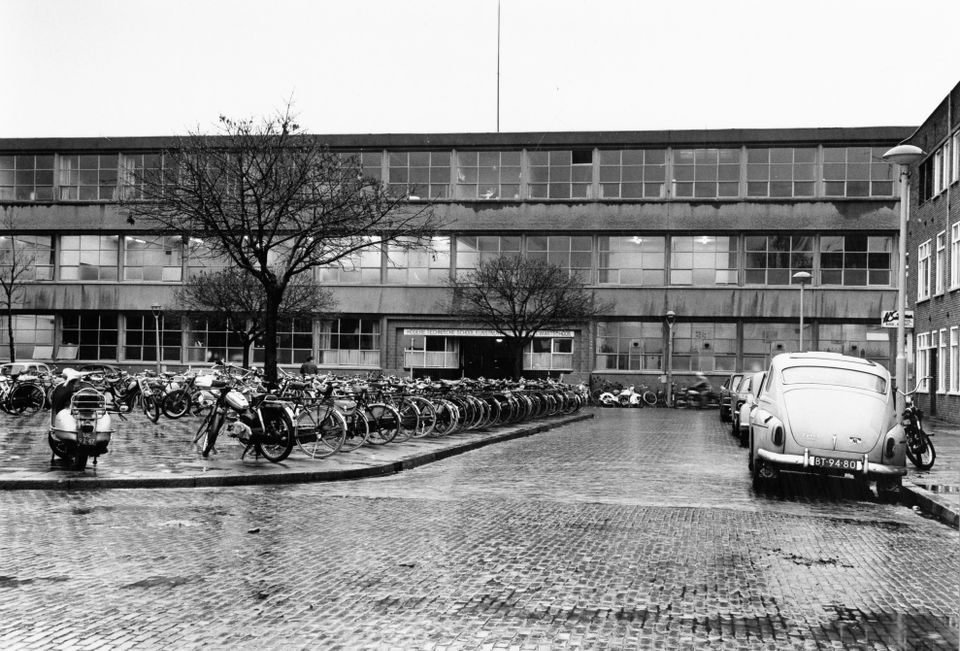
Petrus Driessenstraat – The Nijverheidsschool, built in 1922, is still immortalised in the tiles of the Wiebengacomplex. The building designed by Wiebenga and Van der Vlugt was the first example of the New Objectivity style, also known as ‘Het Nieuwe Bouwen’. At the time, the modern design was not well received, but what was once controversial is now cherished. After falling into disrepair in the 1960s and 1970s, it was saved and preserved (swipe for a photo from 1966, Groninger Archieven). Today, the building houses healthcare programmes run by Hanze University of Applied Sciences Groningen.
View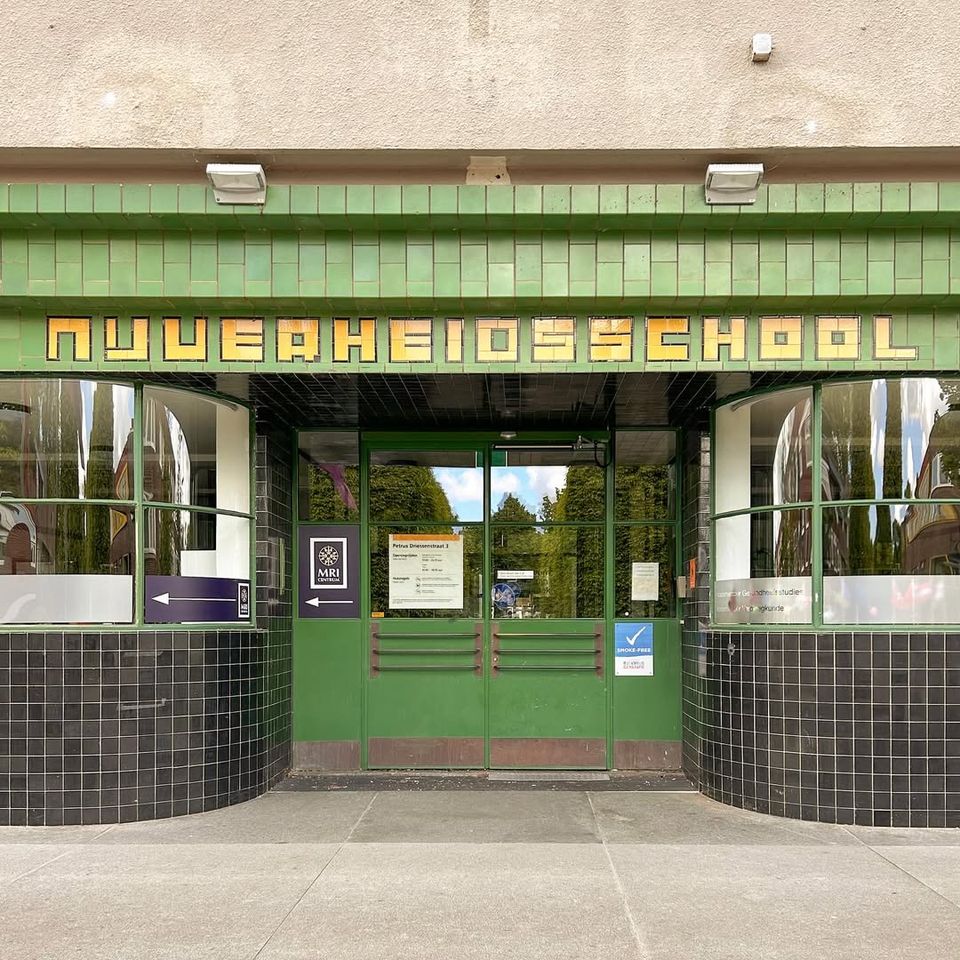
‘Stad en Lande’ dairy
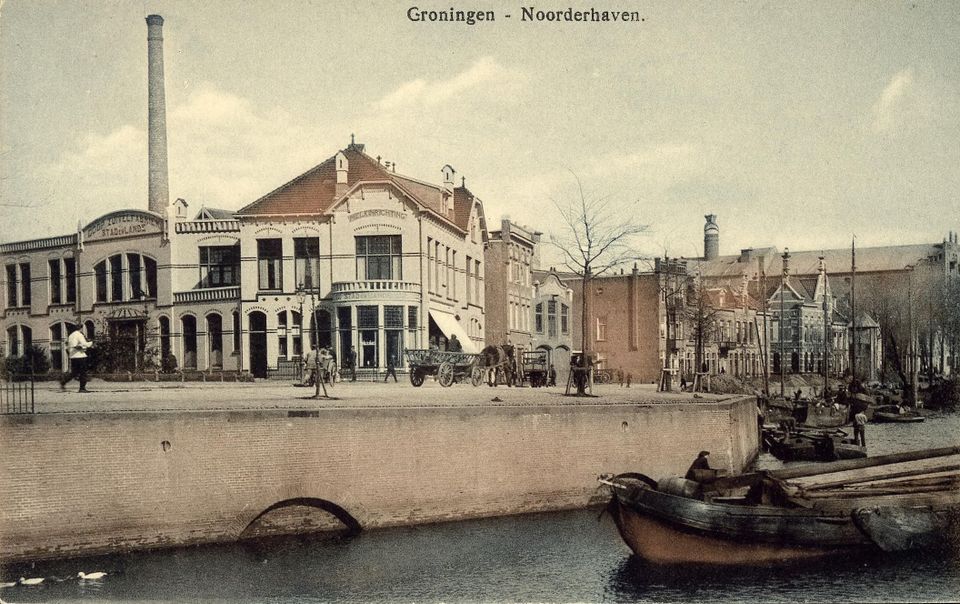
Noorderhaven – Dairy: the name on the Stad en Lande building on Noorderhaven actually gives it away. Farmers used to come here with carts to deliver their milk. The building was constructed around 1909 as a cooperative dairy where milk from the region was processed into dairy products. It was a key link in the transition from farmers selling their milk directly to the modern dairy industry (swipe for a postcard from 1905, Groninger Archieven). By the 1920s, that function had already ceased and the building was converted into a residential property.
View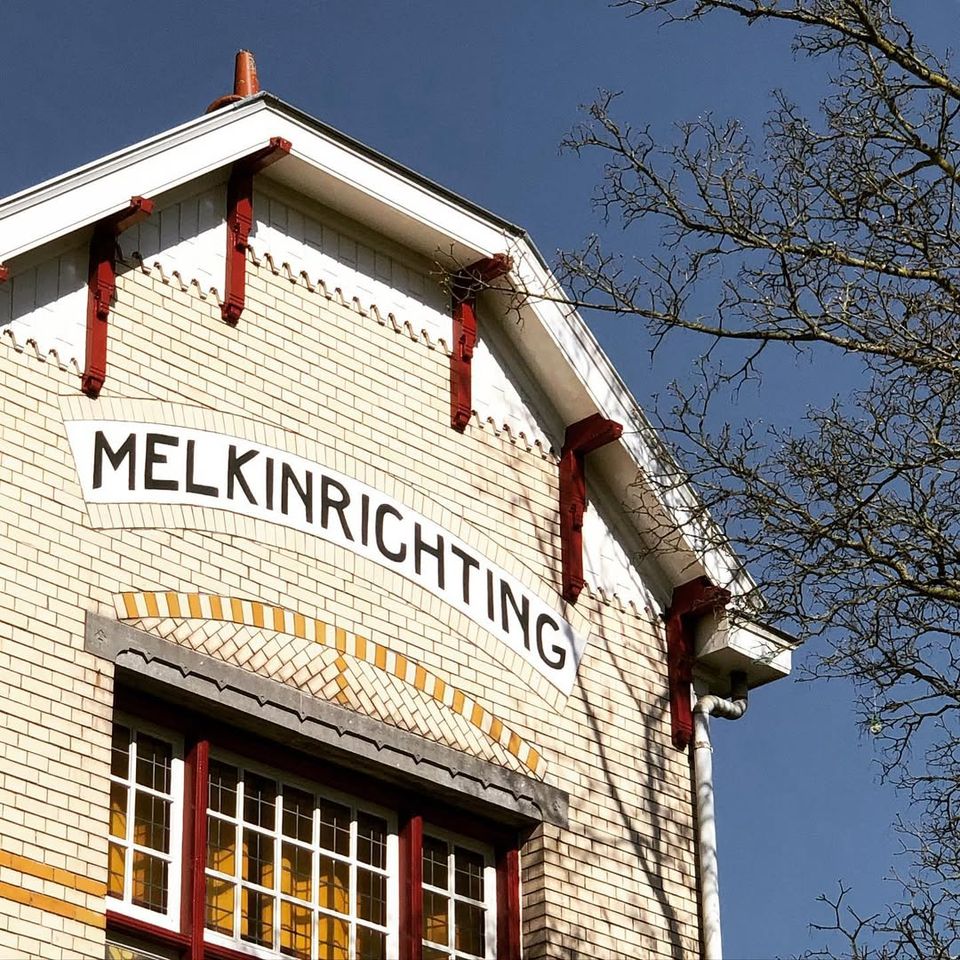
Insulinde
Het Klooster – The word ‘Insulinde’ still adorns the façade of Het Klooster. In 1927, the coffee and tea factory moved in here, occupying a complex that stretched all the way to Oude Ebbingestraat: a shop and office at the front, and a factory with machinery and a loading and unloading area at the rear. The name refers to the Indonesian archipelago (now Indonesia). In 1974, Tiktak took over the company and only the name remained. Today, the building houses two dance schools.
View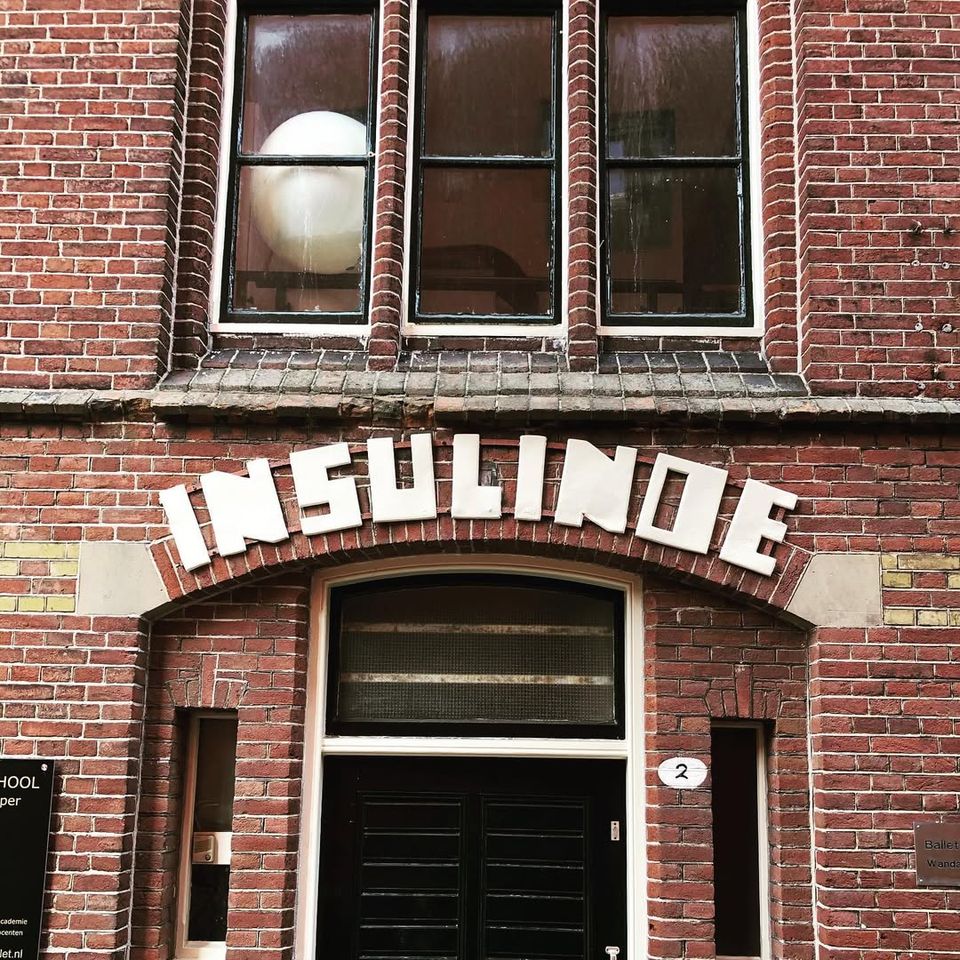
P. Koning Tobacco Factory
W.A. Scholtenstraat – Groningen’s tobacco industry is no longer what it used to be, which is good news for our lungs. The city once boasted many large and small factories where chewing tobacco and smoking products were produced. Some were later taken over by Niemeyer, whilst others disappeared from the streetscape. The name P. Koning lives on mainly in this tiled panel. Following the takeover of R.A.J. Loot, the commercial premises known as ‘De Tabaksplant’ were fitted with such a tile panel bearing the name P. Koning in 1922. Today, the building is used as a residential property.
View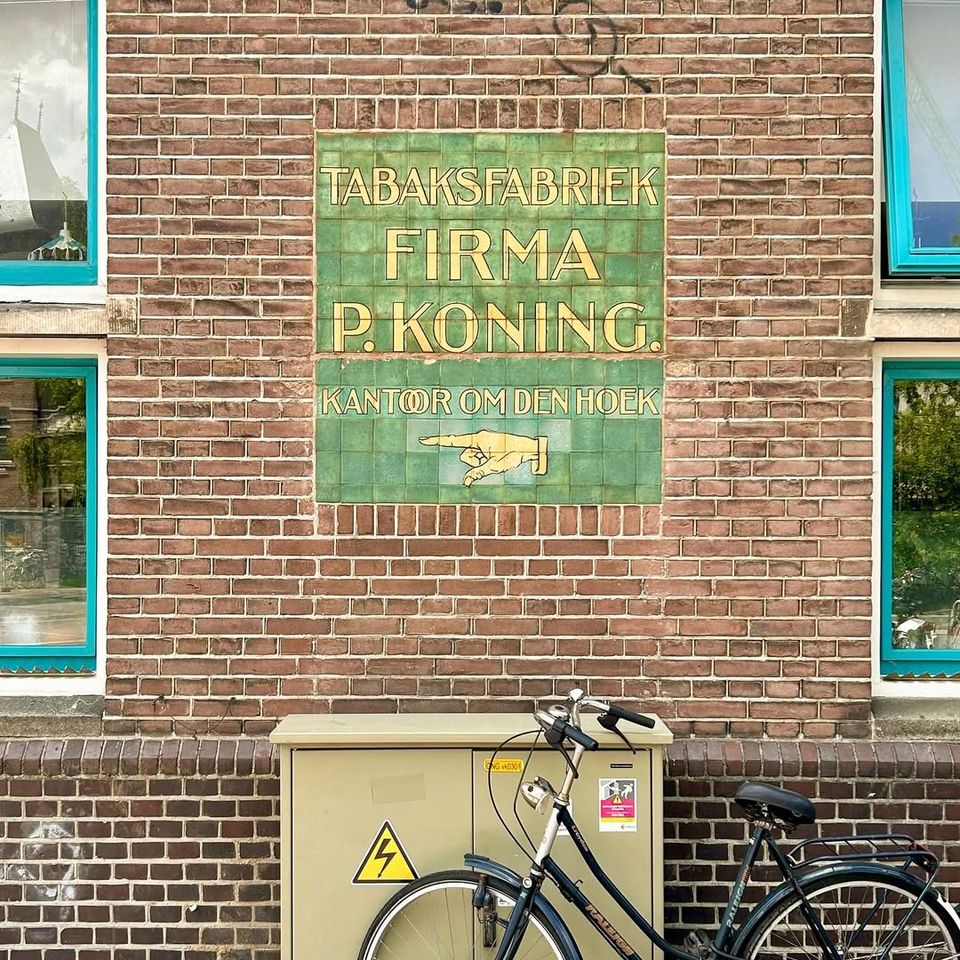
Handicrafts and home-based crafts
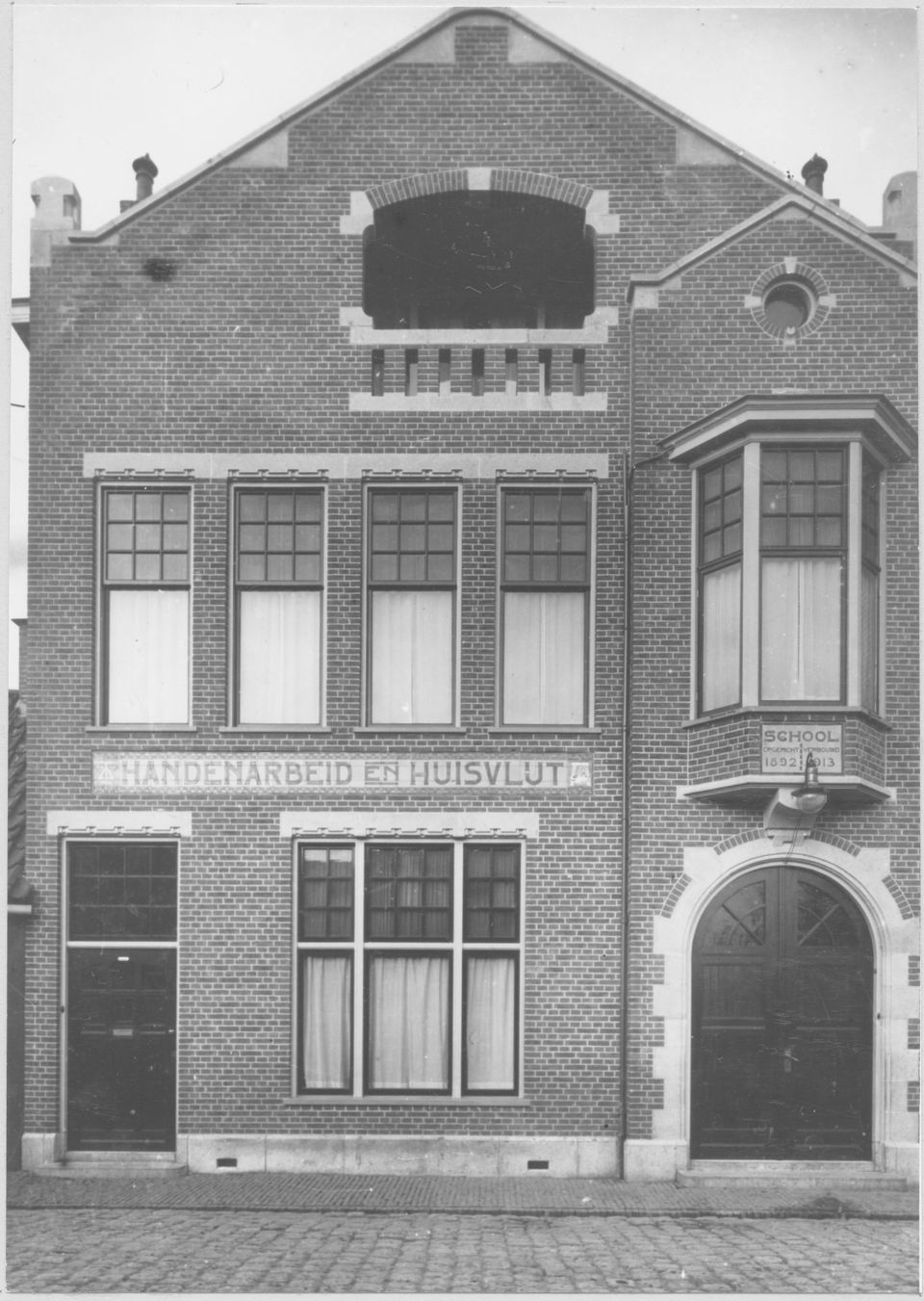
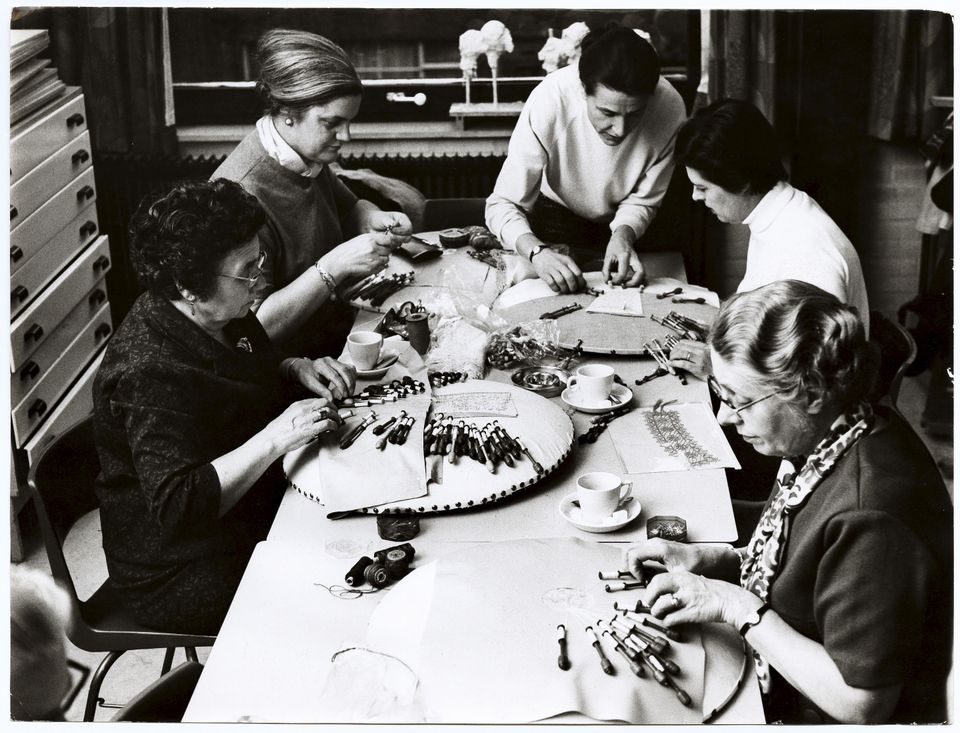
Walstraat – The School for Manual Labour and Domestic Arts, also known to the people of Groningen as the ‘Snieschoule’, began in 1892 as a factory school and developed into a place where people worked with their hands: from wood and copper to drawing and handicrafts. The building on Walstraat was constructed in 1913–1914 as the School for Manual Labour and Domestic Arts. Later, the focus shifted to preparatory vocational education and creative courses for adults. Creativity has never really disappeared from the place; today, Tumult is based here, offering courses in visual arts (swipe for archive photos from the 1960s and 1970s and of the building around 1913, Groninger Archieven).
View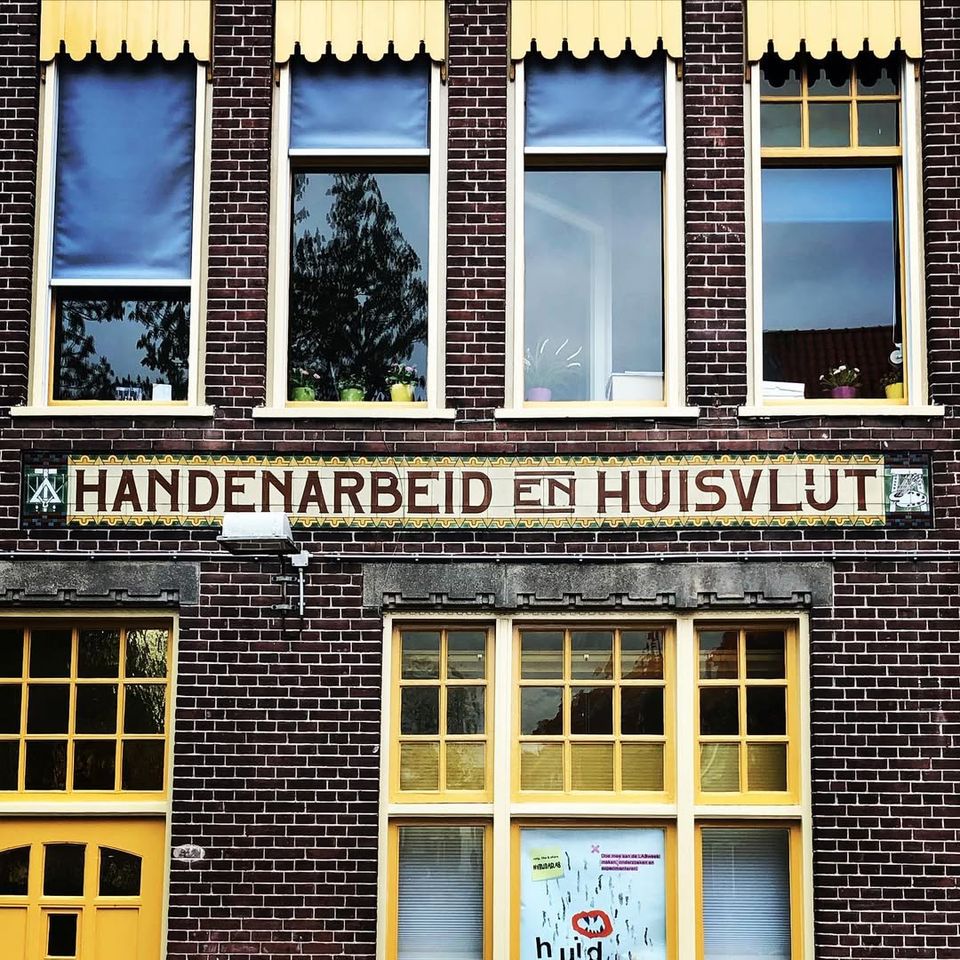
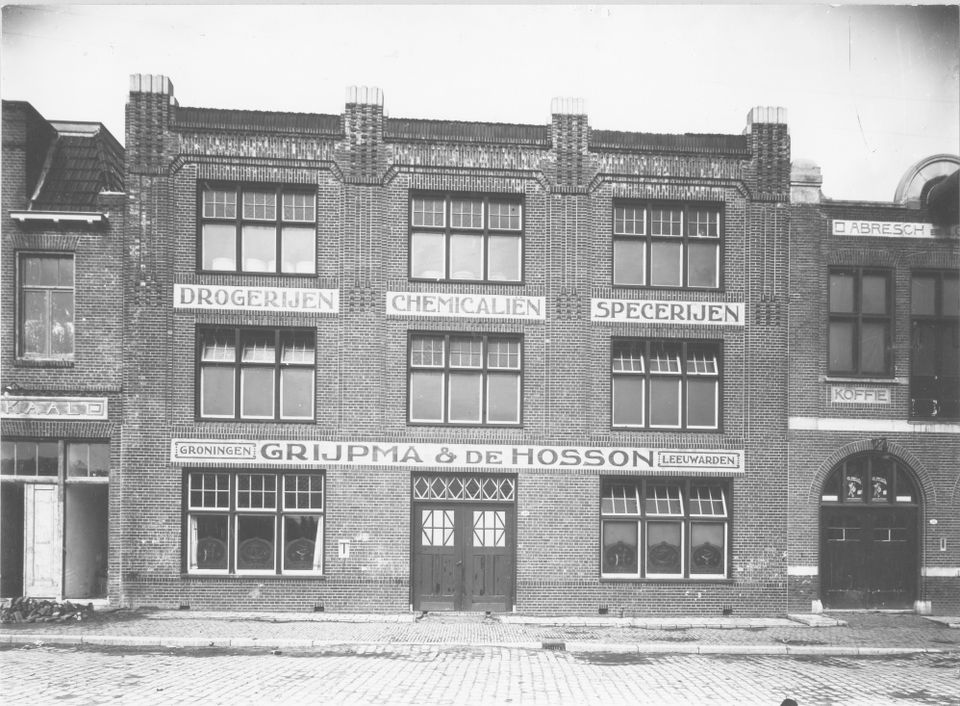
Grijpma & De Hosson
W.A. Scholtenstraat – These days, this is mainly a street of students, cyclists and hurried passers-by on their way to the city centre or the UMCG. In the early 1920s, it was home to wholesalers and businesses that supplied the city. The Grijpma & De Hosson building was constructed during that period to house a wholesale business dealing in drying agents, chemicals and spices. Above the door, this is still visible in sleek 1920s lettering. The firm marketed products such as cough syrup, wart tincture, corn ointment and medicinal tar soap (swipe for a photo from 1922, Groninger Archieven).
View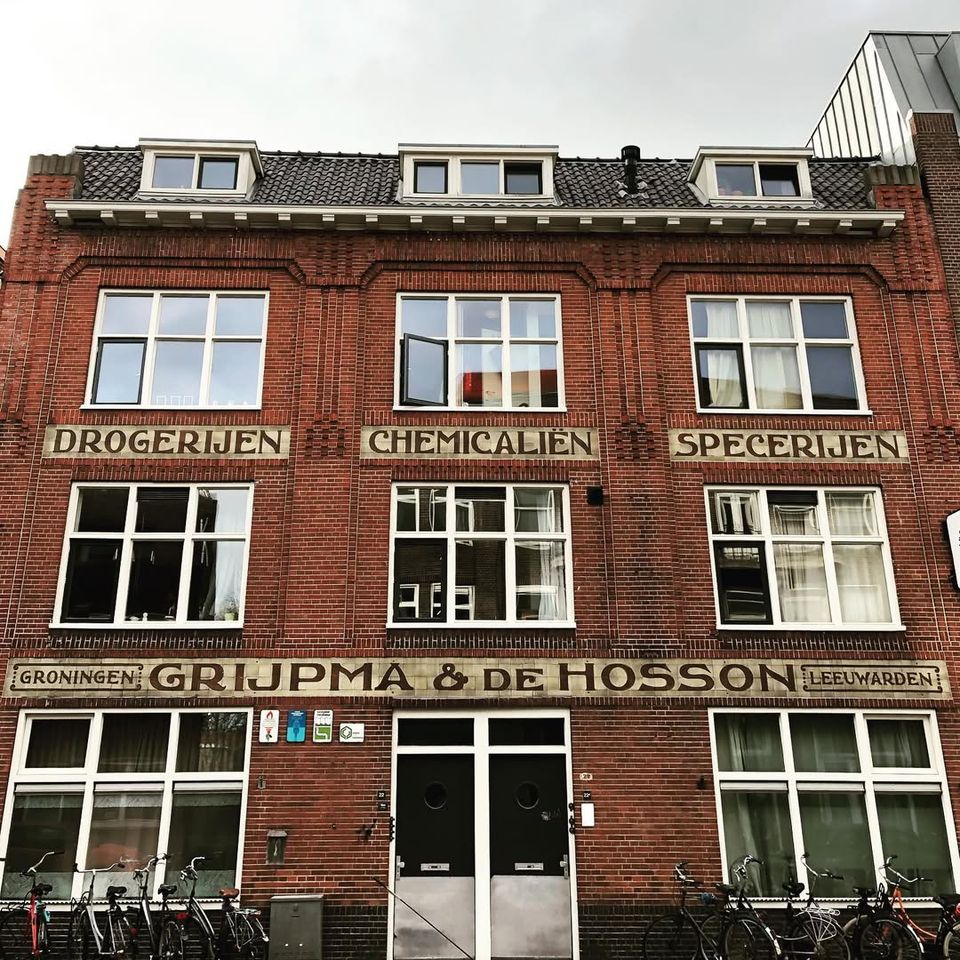
Garage
Radebinnensingel – On the Radebinnensingel, you can still see the façade of the former Van Heukelem garage. A Cubist Amsterdam School building dating from 1931, designed by the Groningen-based architectural firm Nijhuis & Reker. Above the roller shutter, the word ‘garage’ is still visible in slanted letters, a clear indication of what once stood here. The wooden garage doors have disappeared, replaced by a roller shutter.
View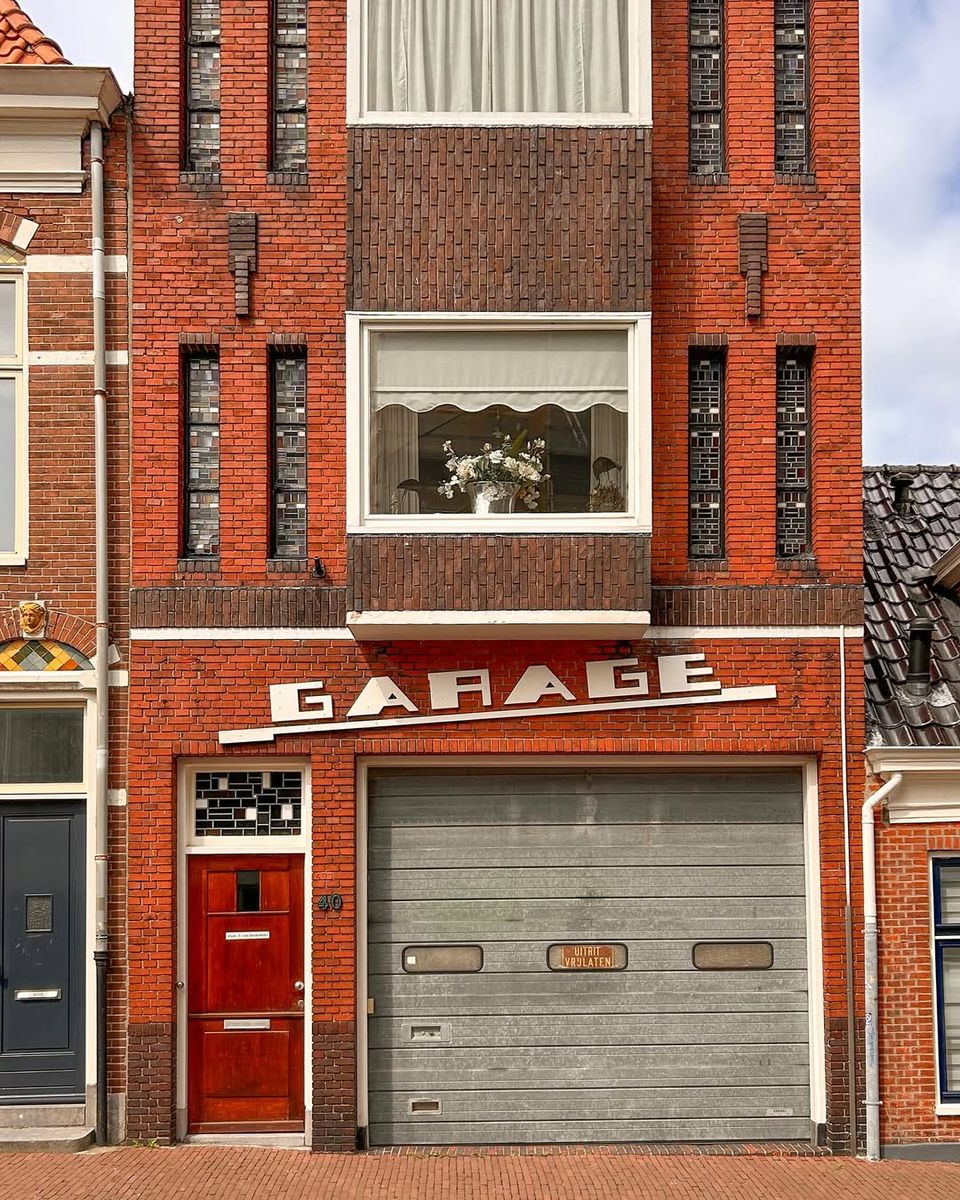
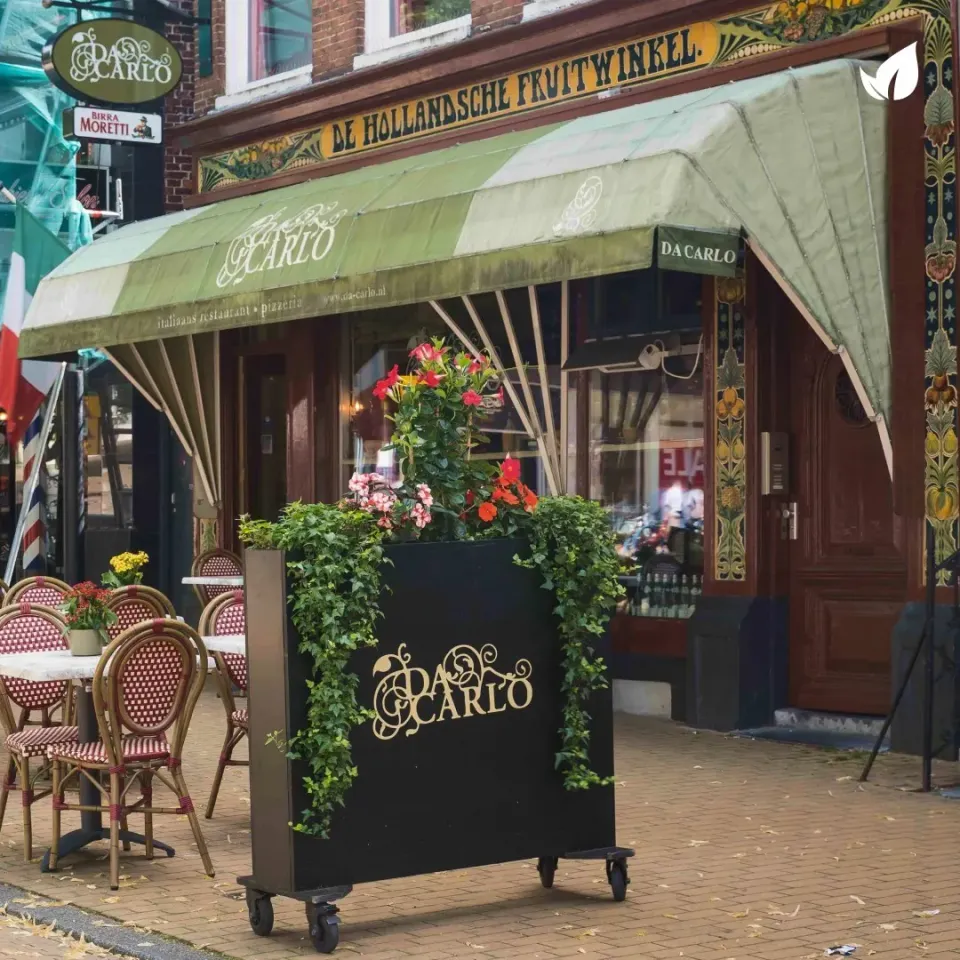
Hollandsche Fruitwinkel
Gedempte Zuiderdiep – Where you now eat pizza, you used to buy fruit and vegetables. Before the war, there was a fruit and vegetable shop here, presumably called ‘De Hollandsche Fruitwinkel’. That history is still visible on the façade. The Art Nouveau tile panel depicts various types of fruit and vegetables, showing what was once sold here. After the Second World War, the building was given a new lease of life as a restaurant.
Friso Flour Mill
Eendrachtskade North Side – Along the Eendrachtskanaal, warehouses, storage facilities and factories sprang up at the start of the last century. The Friso flour mill was also built here: a place where flour was stored and traded for the growing city. Nowadays, there are no longer any sacks of flour here, but the lettering still hangs there, serving as a reminder of a time when the canal was the domain of trade, storage and industry.
View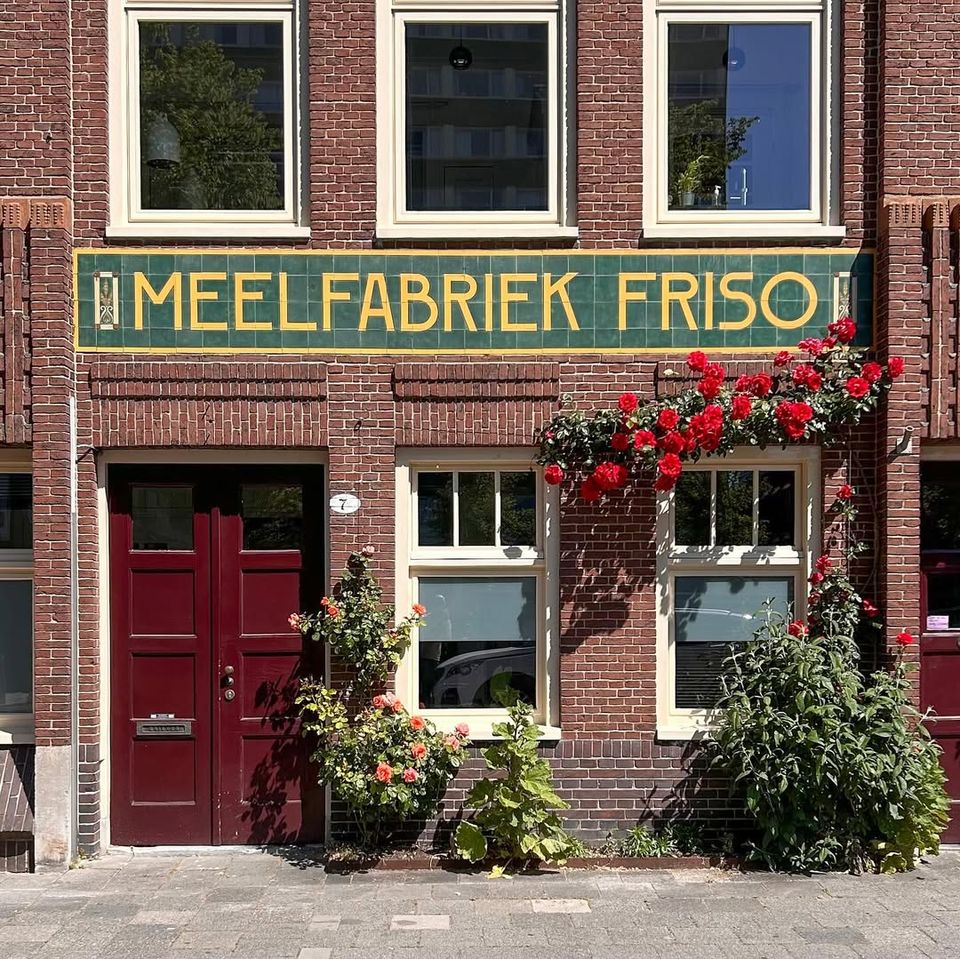
Want to discover more of Groningen’s façades, typography and striking buildings? Take a look at enthusiasts Roel Siebrand and Groningse Gevels.