The Amsterdam School in Groningen
We’re heading back to school – to the Amsterdam School. Why? Groningen is often referred to as the second city for the Amsterdam School style. And it’s not just in the city itself, but throughout the province too, that you’re very likely to come across this distinctive architectural style. In fact, the province of Groningen as a whole boasts the highest number of buildings in this architectural style after the Dutch capital itself. Here are a few great places to discover the Amsterdam School style.
City
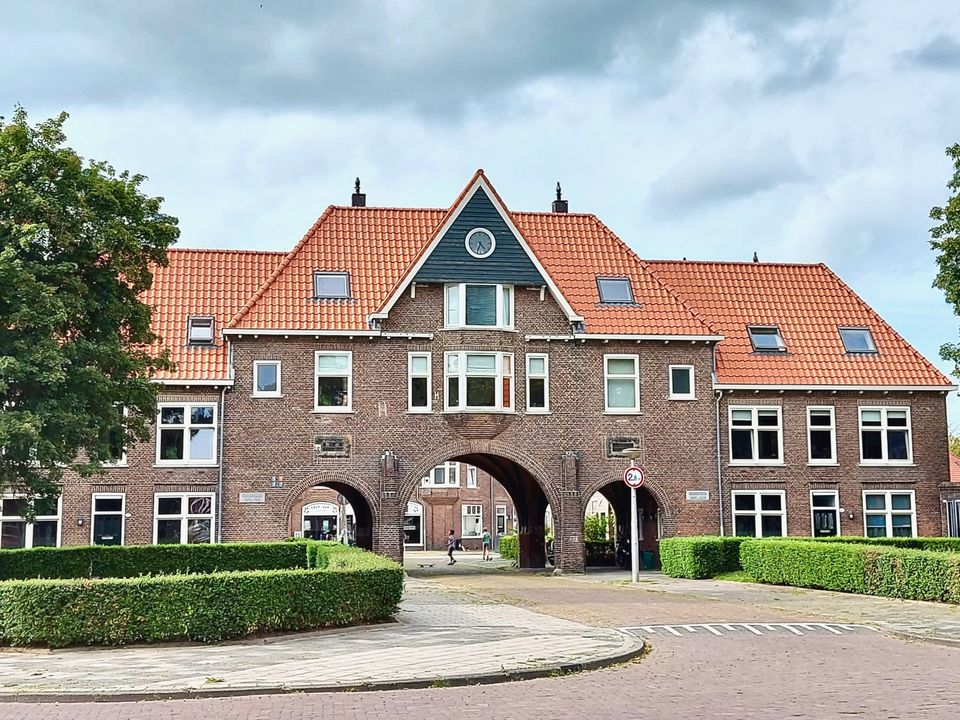
Cortinghpoort (1920)
De Hoogte, Groningen – The Cortinghpoort, named after the castle that stood here in the Middle Ages, is the main entrance to the De Hoogte residential neighbourhood. The gate, which features unmistakable elements of the Amsterdam School style, forms part of a sort of city wall that gives the neighbourhood an intimate feel. Just behind the gate are several local shops. A hidden gem of a neighbourhood, well worth exploring.
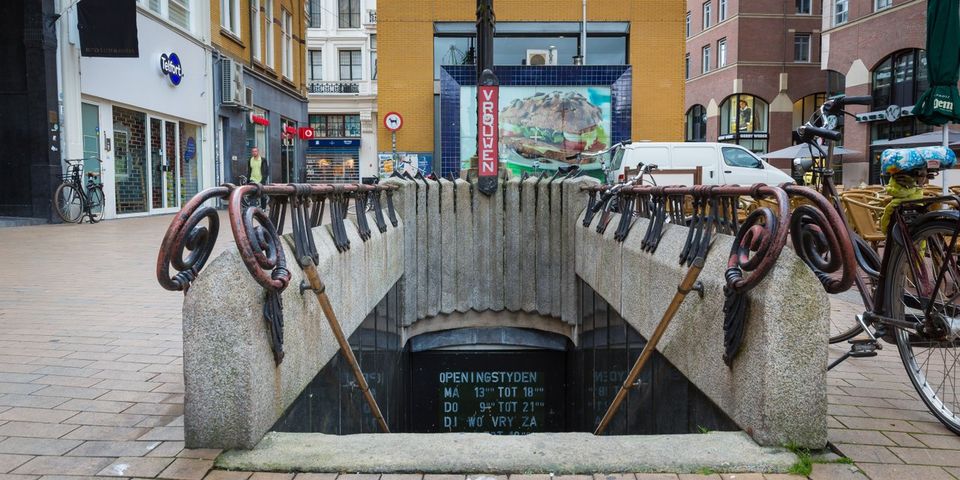
Ondergronds toilet (1926)
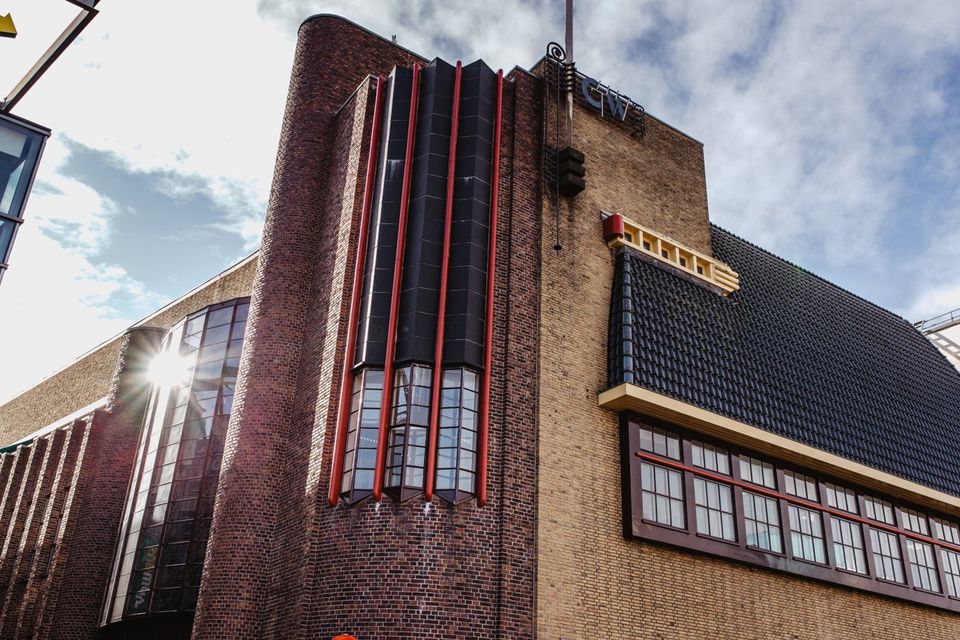
Grote Markt, Groningen – A real eye-catcher, although that wasn’t the original intention. The public toilet on the Grote Markt was actually built underground because otherwise it would have been too conspicuous. The symmetrical design incorporates features of both the Amsterdam School and Art Deco styles, and the entrances are strongly reminiscent of underground station entrances. The above-ground sections bear clear hallmarks of the Amsterdam School. For example, the staircases are adorned with curling ornamental ironwork by H. van der Borg Smederij of Groningen.
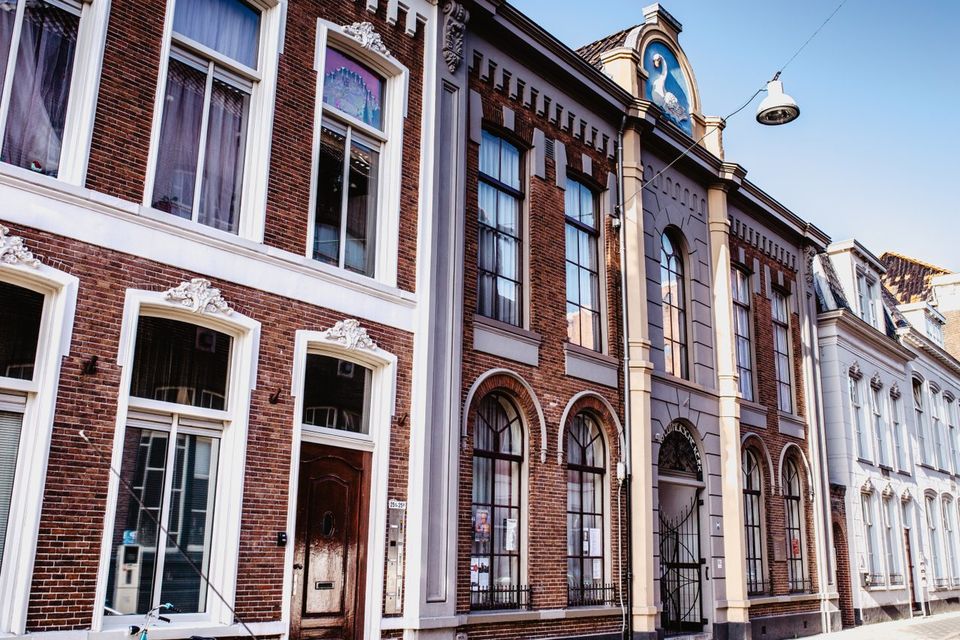
Lutherse kerk (1925)
Haddingestraat, Groningen – Anyone wishing to visit this church will first have to look quite carefully. From the street, it is not immediately obvious that a church is located here. It is, in fact, the only church in the city of Groningen that has retained its character as a clandestine church. The adjacent Lutherzaal was designed in 1925 in the Amsterdam School style and can be reached via the courtyard of the former almshouse. A typical example of a ‘hidden gem’, then.
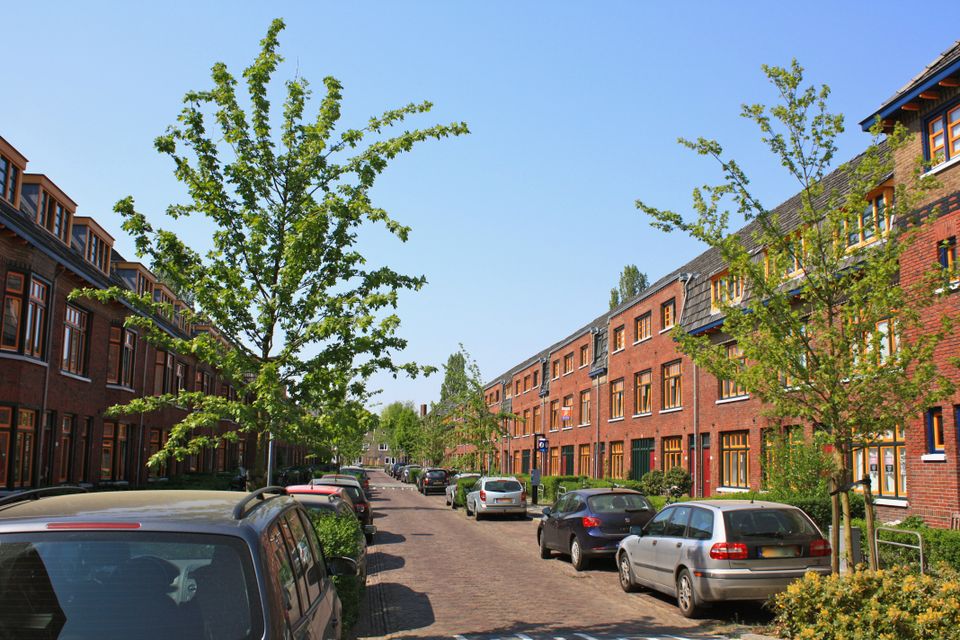
Gerbrand Bakkerstraat (1922)
Oosterparkwijk, Groningen – The striking houses with blue and orange window frames and deep red doors make Gerbrand Bakkerstraat a feast for the eyes. The colourful architectural style used is often referred to as the Groningen variant of the Amsterdam School. Thanks to the low-rise nature of the houses, the flowerbeds and the trees, this street really has a village-like atmosphere.
Bernoulliplein housing complex (1928)
Korrewegwijk, Groningen – Bernoulliplein is situated on a large lawn along the Korreweg in the city. Events are regularly organised here. The square is surrounded by distinctive buildings in the Amsterdam School style. The project was built in four phases, each showcasing a different style. This resulted in a varied ensemble in the provincial Amsterdam School style, incorporating elements of ‘het Nieuwe Bouwen’. Can you spot the different styles?
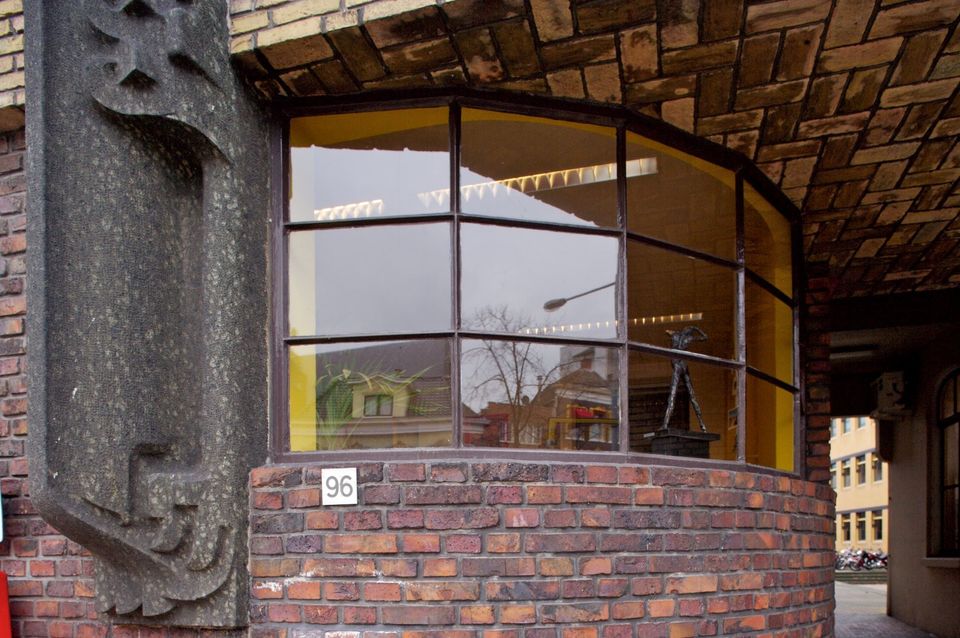
Het Oude Politiebureau (1928)
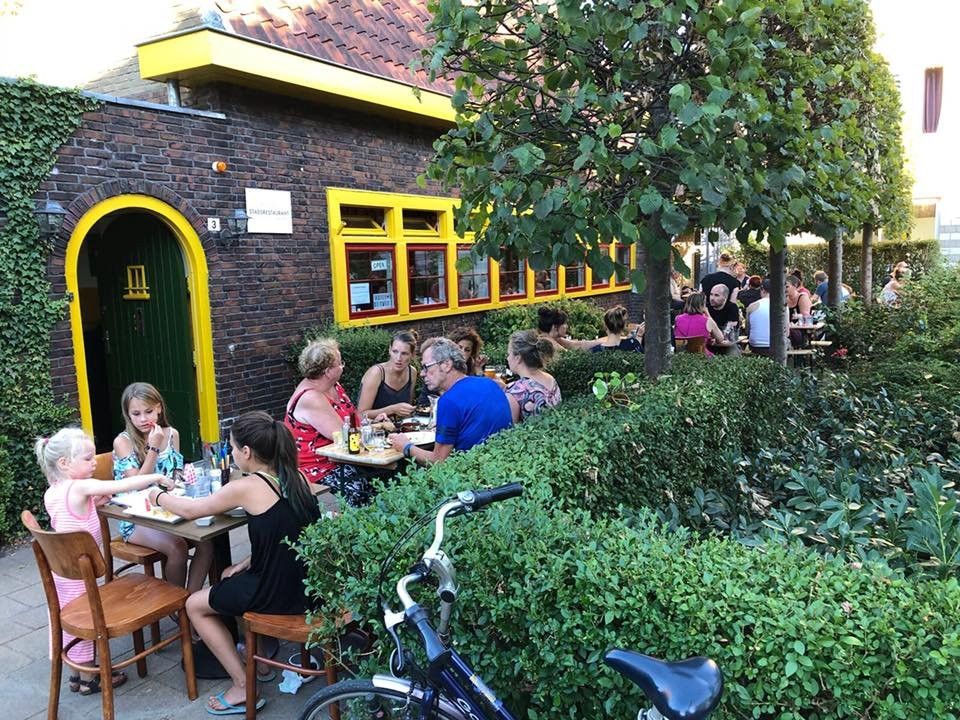
Oosterparkwijk, Groningen – Fancy dining in Amsterdam School style? You can do just that in this former neighbourhood post office from the 1930s, with its brown-red bricks and cheerful, bright yellow window frames accented with red. This striking building, designed by city architect Siebe Jan Bouma, has now been operating as a cosy city restaurant for over three years. Don’t forget to take a stroll through the neighbourhood after dinner. Scattered throughout the Oosterparkwijk, there are many more buildings in this style to be found.
Province
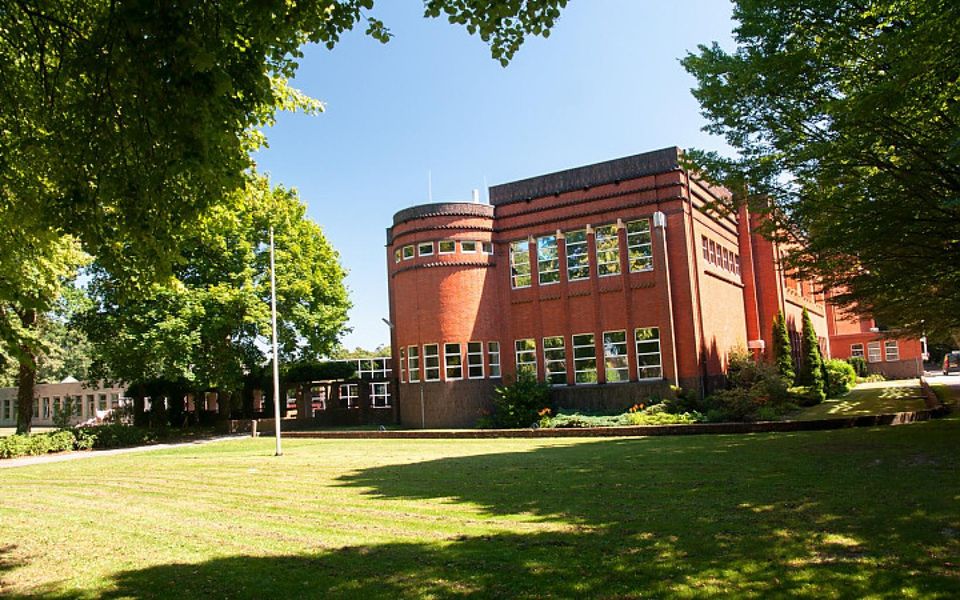
Ter Apel Schoolgebouw (1924)
Oudeweg 41, Ter Apel – The schoolgebouw on Oudeweg in Ter Apel dates from 1924. It is one of the earliest examples of the Amsterdam School style in the province of Groningen. Thanks to its carefully designed detailing, the building is also a fine example of the work of the Amsterdam architect Westerhout. Many details on the exterior refer to the sea and shipping, such as the seahorse on the flagpole and the undulating decorative edges of the roof tiles. Perhaps you can spot some more?
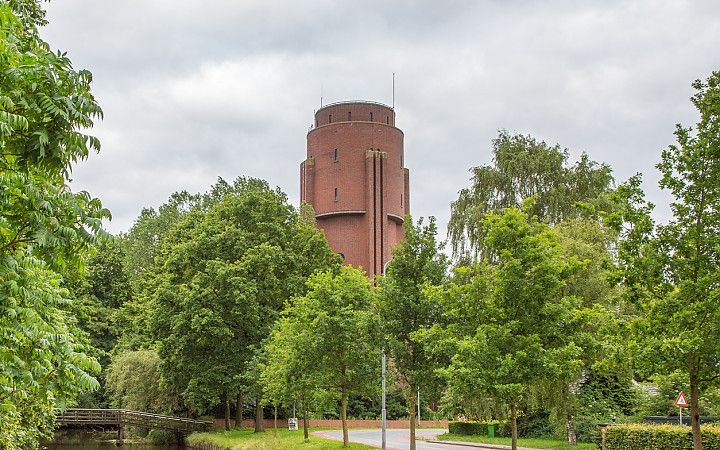
Watertoren Stadskanaal (1935)
Ceresstraat 1, Stadskanaal – The drinking water for Stadskanaal came from the lower-lying town of Onnen. To bring this water to Stadskanaal and pump it on from there to other places, a powerful pump was needed. With the arrival of the water tower (in 1935), such a powerful pump became less necessary. The tower is 42.67 metres high and was designed by H.F. Mertens in the Amsterdam School style. This is clearly evident, amongst other things, from the red bricks used.
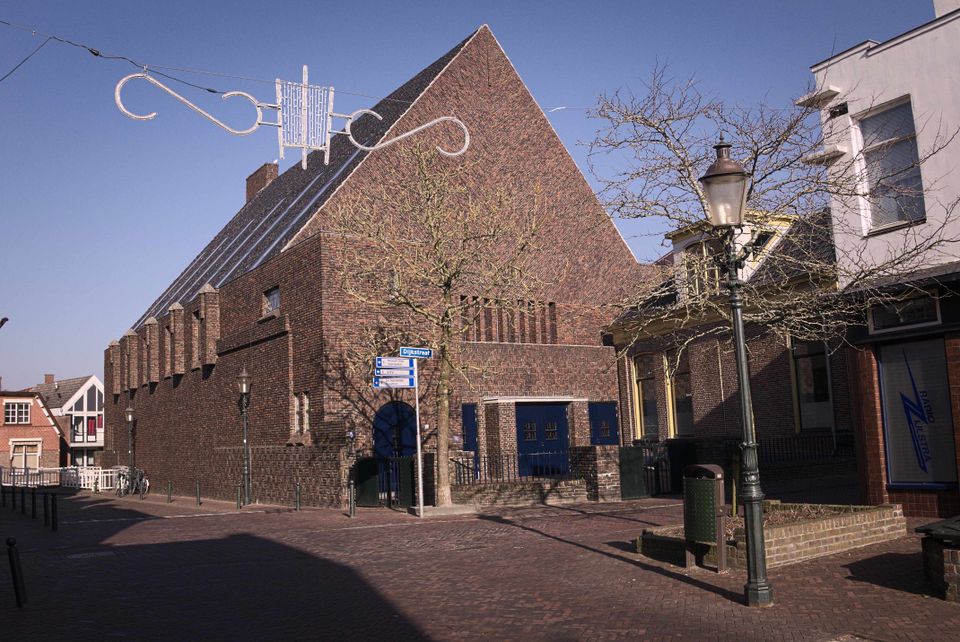
Gereformeerde kerk Appingedam (1928)
Dijkstraat 73, Appingedam – From the outside, you might not immediately think of the Amsterdam School style, but to appreciate this you’ll need to step inside the church. The interior of the Reformed Church in Appingedam can be described as austere yet imposing. The abstract works of the artists’ collective De Ploeg can be recognised in the paintings on the vaulted panels.
Onderdendam Church (1929)
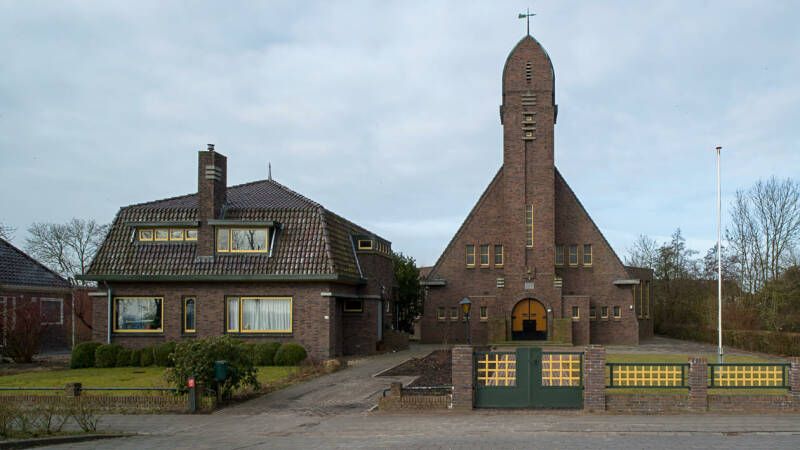
Bedumerweg 34, Onderdendam – If the Amsterdam School had been a church, this is what it would have looked like. The Reformed ‘hall church’ in Onderdendam features many decorative concrete elements in which the influence of the Amsterdam School is clearly recognisable. The fan-shaped layout of the wooden pews and the wood-panelled parabolic vault are examples of this.
Fancy a taste?
There is so much more to discover. Look at the city and the province with different eyes, and you will be amazed at how many buildings display features of that characteristic Amsterdam School style. Reading tip: Pronkjuwelen van baksteen (Showpieces of brick), on sale in the Groningen Store.