

Sint Anthony Gasthuis
The Sint Anthony Gasthuis was founded in 1517 to provide shelter for the poor and the sick. Initially, the almshouse was home to poor elderly people, but later also to plague victims (1608–1644).
Have a look now


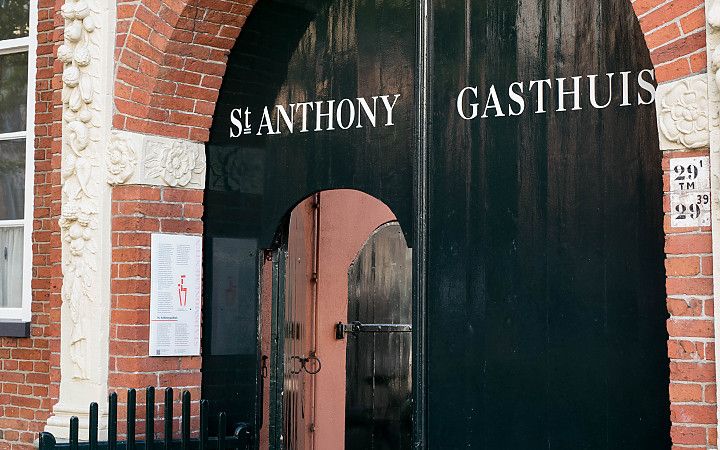


It is hardly surprising that these people ended up in this hospice. The townspeople preferred not to have the sick and the mentally ill too close to them. The hospice’s location, just outside ‘ de Oosterpoort ’ on the outskirts of the town, was therefore ideal.
From 1702 (until 1844), the Anthony Gasthuis took over the role of mental asylum from the Peper and Pelstergasthuis. From that point onwards, people with mental health conditions were accommodated here. This proved to be a lucrative development for the asylum, as the patients’ board fees provided a stable income. Furthermore, on Sunday afternoons, the patients became a tourist attraction that drew large crowds.
At the front (on Rademarkt) i…
It is hardly surprising that these people ended up in this hospice. The townspeople preferred not to have the sick and the mentally ill too close to them. The hospice’s location, just outside ‘ de Oosterpoort ’ on the outskirts of the town, was therefore ideal.
From 1702 (until 1844), the Anthony Gasthuis took over the role of mental asylum from the Peper and Pelstergasthuis. From that point onwards, people with mental health conditions were accommodated here. This proved to be a lucrative development for the asylum, as the patients’ board fees provided a stable income. Furthermore, on Sunday afternoons, the patients became a tourist attraction that drew large crowds.
At the front (on the Rademarkt), the courtyard is accessed via a beautifully carved 17th-century sandstone gateway. The rear courtyard was created in 1927 with the construction of a number of houses in a simple Amsterdam Style. The various façade stones clearly show that the Sint Anthony Gasthuis has undergone considerable alterations and renovations over the centuries.