
1. Noorderplantsoen
When the weather is fine, the Noorderplantsoen is full of locals and students enjoying the outdoors. Would they know that fierce battles were once fought here? The corners of the embankments reveal the history. In the 17th century, the city’s defensive ramparts were built here and the city moats were dug. These days, the park is primarily a place to get together and enjoy the sunshine.
2. Harssensbosch Farm
You leave the city behind and cycle for a while in the middle of nowhere. Situated in Europe’s oldest cultural landscape, the Reitdiep area, stands a solitary little farmstead: Harssensbosch Farm. Centuries ago, this was the hamlet of Harssens, with a church, a cemetery and even a manor house. The manor house was demolished in the 18th century, but the site of the manor is still clearly recognisable in the landscape.
3. The church at Klein-Wetsinge
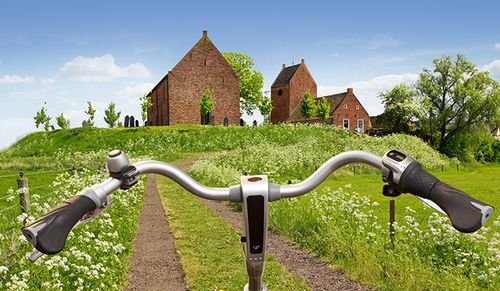
A path lined with pollarded willows connects Klein-Wetsinge with Groot-Wetsinge. Your eyes are not deceiving you: Klein-Wetsinge is indeed larger than Groot-Wetsinge. ‘Groot’ actually means ‘high’, and Groot-Wetsinge is situated on a wierde, a man-made settlement mound. The church in Klein-Wetsinge (1840) is an ideal spot to stop for a bite to eat and a drink. Be sure to climb the stairs as well. From the viewing platform above the vaults, you’ll have a fantastic view of the surrounding countryside.
-
The church at Klein-Wetsinge

-
Noorderplantsoen

-
Harssensbosch Farm

-
Groot-Wetsinge

-
E-fatbike from Spyderwheelz

4. Bij Hammingh, Garnwerd
Crossing the bridge over the Reitdiep, you drive into the wierden village of Garnwerd. The former ferry house ‘Bij Hammingh’ is a listed building with a rich history, built by Egbert Hammingh’s grandfather in 1876. The building, which still retains the atmosphere of yesteryear, is situated on the dyke with stunning views over the Reitdiep valley, the De Meeuw windmill and the Garnwerd bridge. What’s more, the food here is delicious, made with fine local produce and prepared with care and passion.
“ “Come on, I’ll show you my favourite little street in Garnwerd.” ”
- Sanne Meijer
5. Sluizencomplex Aduarderzijl
Climb up to the historic lock for a magnificent view. The first locks in Aduarderzijl were built very early on: around 1400. The lock, which was made of wood at the time, ensured that excess water from the area around the city of Groningen flowed into the Reitdiep, which remained open to the sea until the nineteenth century, allowing the water to drain away. During the St Martin’s Flood of 1686, this lock was completely swept away. Today, there are two locks in Aduard: the western Aduarderzijlen (1706) and an eastern sluice dating from 1867.
6. Allersmaborg
In the days of the jonkers, the province of Groningen was dotted with borgen. The Allersmaborg also dates back to the Middle Ages. The thick walls of this old stone house are made of large bricks. These were commonly used in the construction of monasteries and churches and were often fired by monks. The Allersmaborg ’s orchard is home to old Groningen fruit varieties.
-
Garnwerd

-
Bij Hammingh, Garnwerd

-
Aduarderzijl

-
Sluizencomplex Aduarderzijl

-
Allersmaborg

7. Wierdendorp Ezinge
The first dykes are only about 1,000 years old. The Groningers had no desire to wait for this invention. They built wierden, or mounds: broad hills on which they could live high and dry. Ezinge is one of the most famous wierdend villages. This is due to the excavations that were carried out here in the early 20th century. Some of these finds can be found in Museum Wierdenland. Curious about the story of the Ezinge cemetery? Then also listen to The Province podcast about the cemetery.
8. Molen Joeswert
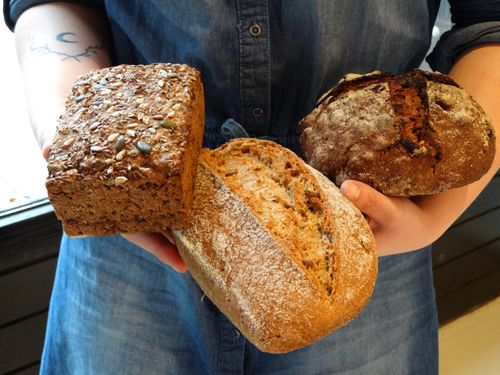
Shops these days are full of spelt bread. But for a long time, spelt was a ‘forgotten’ grain. At the Joeswert grain and husking mill (1855), however, this grain has never fallen into oblivion. The mill is still used to grind spelt. The spelt flour is used to make typical Groningen products such as spelt cake and spelt beer. Do also pop into the mill shop, where, alongside the mill’s own organic wheat, spelt and rye, you can buy many other types of flour.
-
Wierdendorp Ezinge

-
Molen Joeswert

-
Groningen Maritime Museum

9. Maritime Museum
In the city, the old warehouses along the canal reveal the hustle and bustle of days gone by. Ships used to come and go here, and all day long you could hear the clatter of wheels and the clatter of horses’ hooves. For a long time, the city’s oldest harbour district was directly connected to the sea. Patiently waiting for the water to reach the right level? The enterprising people of Groningen had no time for that. They built a high quay, the Hoge der A, for loading and unloading at high tide. On the other side of the channel, a low quay was built for use at low tide: the Lage der A’. Want to find out more about shipping in Groningen? Nearby, in the 14th-century buildings on Brugstraat, is the Northern Maritime Museum.