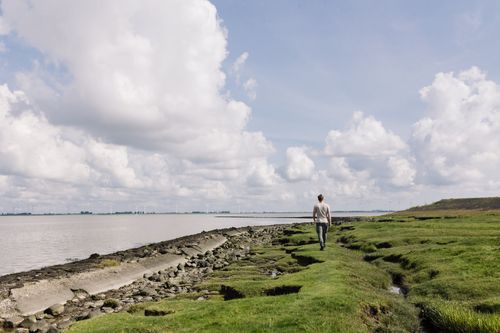
The waterworks at Termunterzijl

In the past, the sea did not stop at the dyke, but flowed much further inland. Through a long struggle against the water, more and more land was reclaimed from the sea. To ensure that all residents of the province would keep their feet dry, various waterworks were built. In Termunterzijl, these structures have become icons of the village.
Boog van Ziel
After de oude sluis in the Termunterzijldiep was destroyed during the St Martin’s Flood of 1686, city architect Antoni Verburgh was commissioned by the city of Groningen to build a new lock. The Boog van Ziel was eventually constructed around 1725. The lock is characterised by its natural stone parapet, on which the coats of arms of the responsible water boards (the city of Groningen and Oldambt) can be seen. Following the construction of De Nieuwe Sluis during the19th century, the Boog van Ziel became redundant.
Read more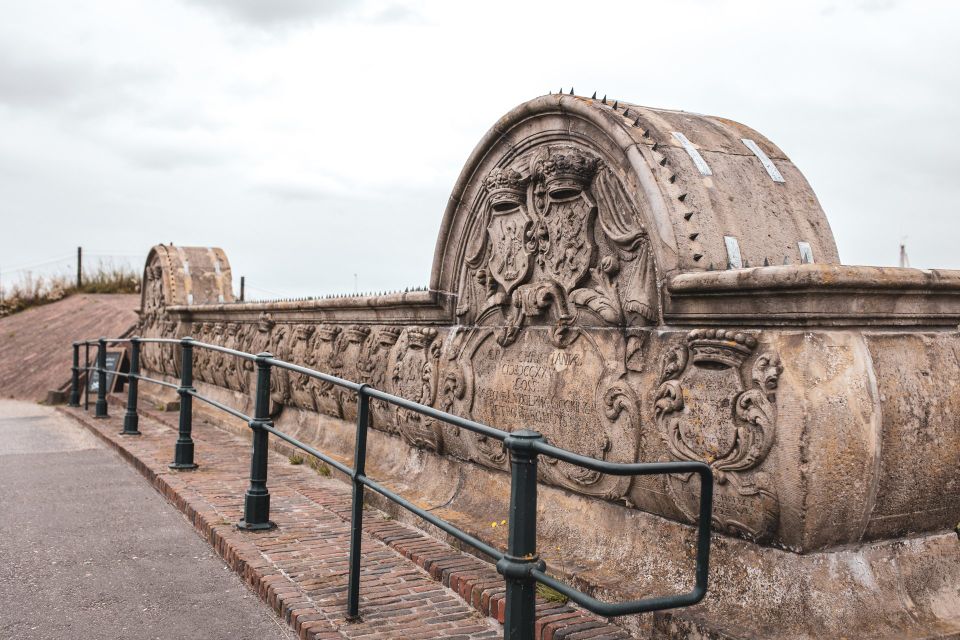
Cremer Pumping Station
From 1931 onwards, drainage by the Oldambt Water Board was no longer carried out using sluices. In the years prior to this, a drainage pumping station had been built at Termunterzijl, which from then on pumped the water out to sea. The pumping station was built by hydraulic engineer Pieter Geert Cremer and was therefore named after him. The advantage of the pumping station was that, unlike the sluices, water could be drained at any time, regardless of the water level. In 2000, the new Rozema Pumping Station took over the role of the Cremer Pumping Station; since then, the pumping station has served as a museum.
Read more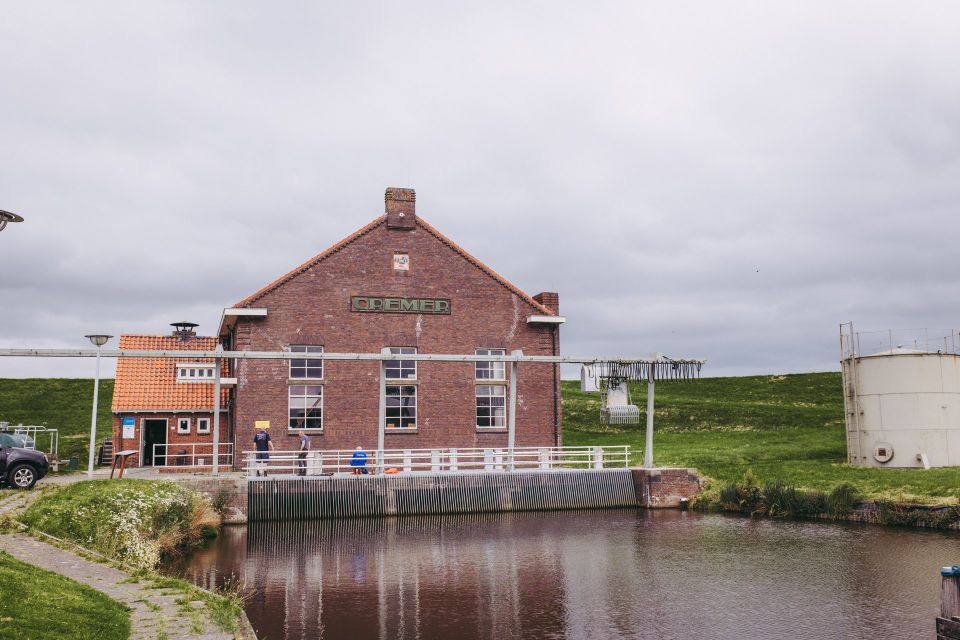
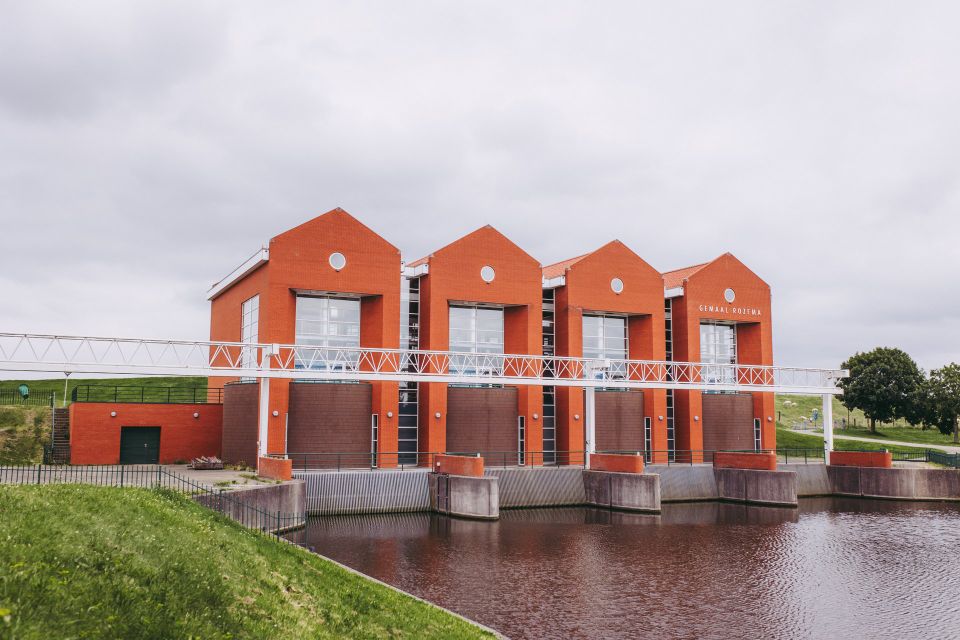
Rozema Pumping Station
When the Cremer pumping station needed replacing due to land subsidence, the then Eemszijlvest Water Board decided that a new pumping station was needed at Termunterzijl. In 2000, the Rozema Pumping Station was commissioned, named after Harry Rozema, a former hydraulic engineer at the Water Board. The new pumping station is larger and more powerful than the old one, enabling it to drain not only Oldambt but also the Eemskanaal-Dollard region. To safeguard fish migration from the Wadden Sea, a fish passage has also been incorporated into the building. Over the years, the red cottages of the Rozema Pumping Station have become one of Groningen’s iconic landmarks.
Read more